
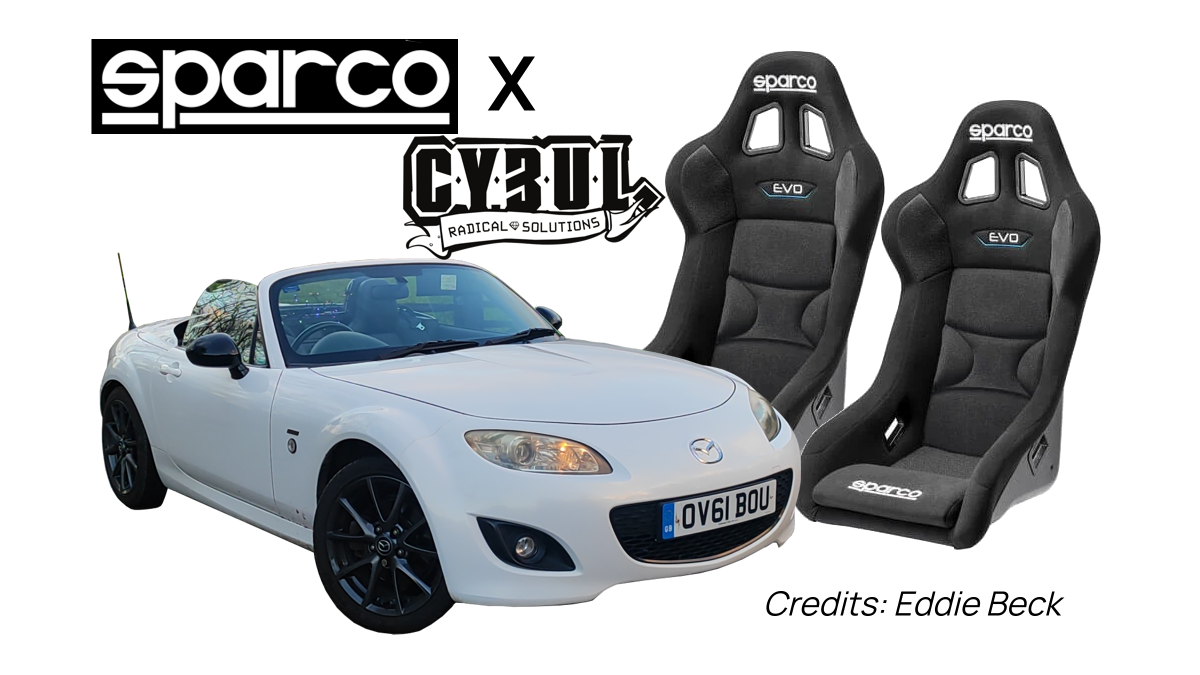
Thumbnail Credits: Eddie Beck / Instagram: @eddiebecke42
What seats fit the NC interior space?
My personal vehicle
My seat setup uses Sparco EVO QRT’s (Regular size) with Cybul base mounts. The driver side has custom side-mounts Cybul made free of labour charge in order for myself (I’m 5ft 8″) to sit closer to the pedals to be comfortable to use them. I use Sparco aluminum racer six-point-harnesses. Highly recommend them. I use the factory door threaded hole with a eyebolt and to mimic that on the trans tunnel I used a FIA spreader-plate and eyebolt combo. Those secure my waist straps back to the car, independent of the seat. The lower crotch straps are bolted to the Cybul base mount. Then the two shoulder straps are wrapped around my rollbar using the rallycross style wrap method.
Sparco EVO QRT
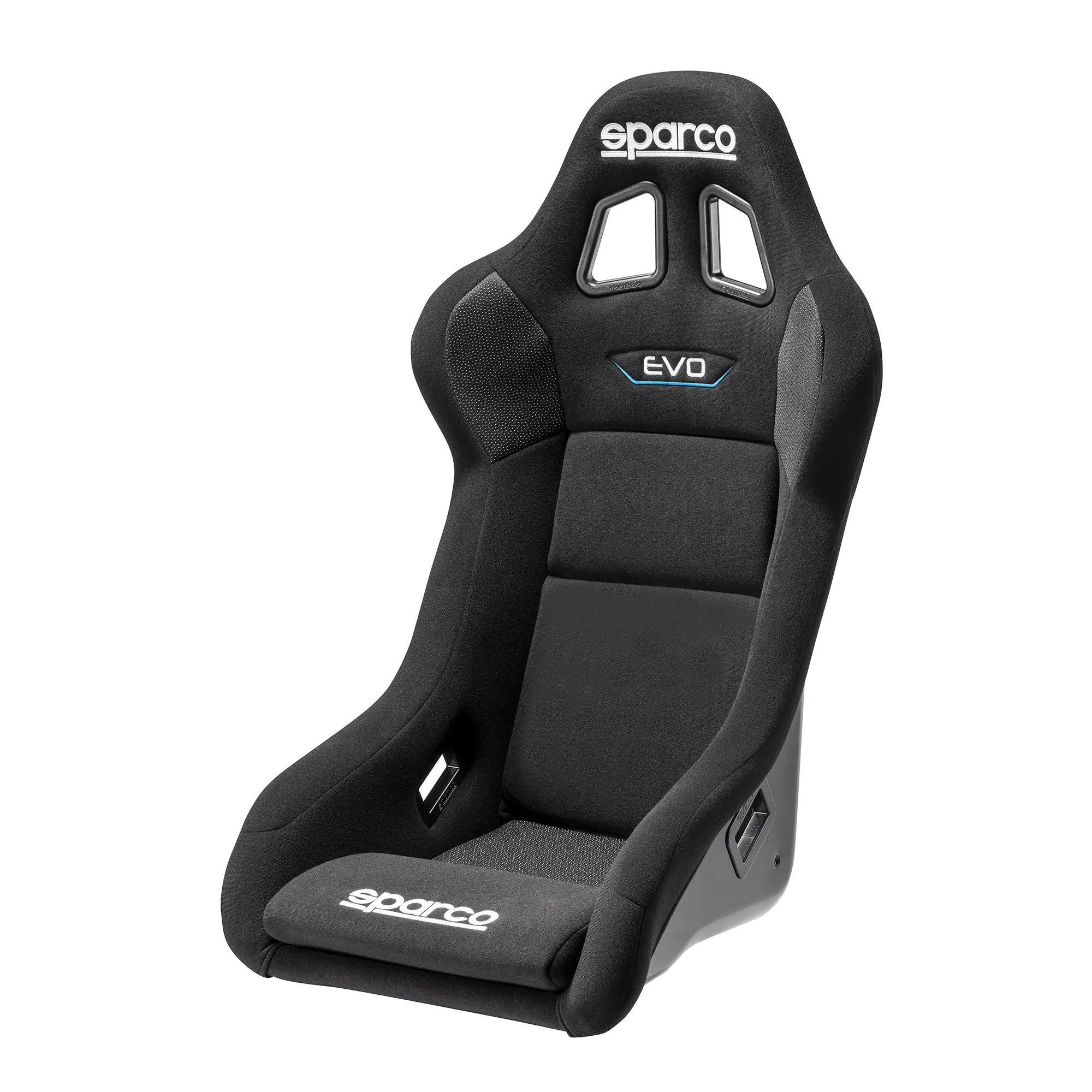
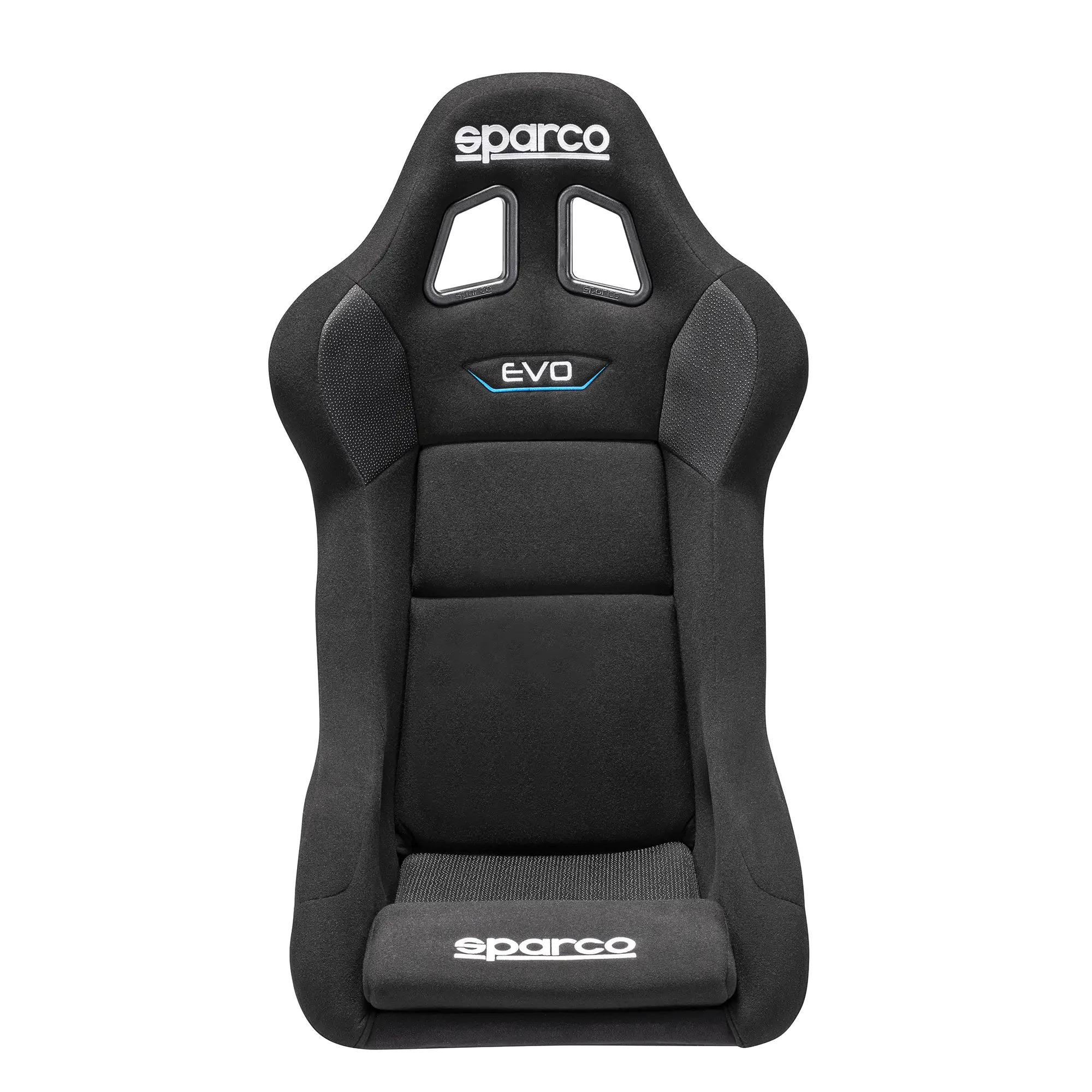
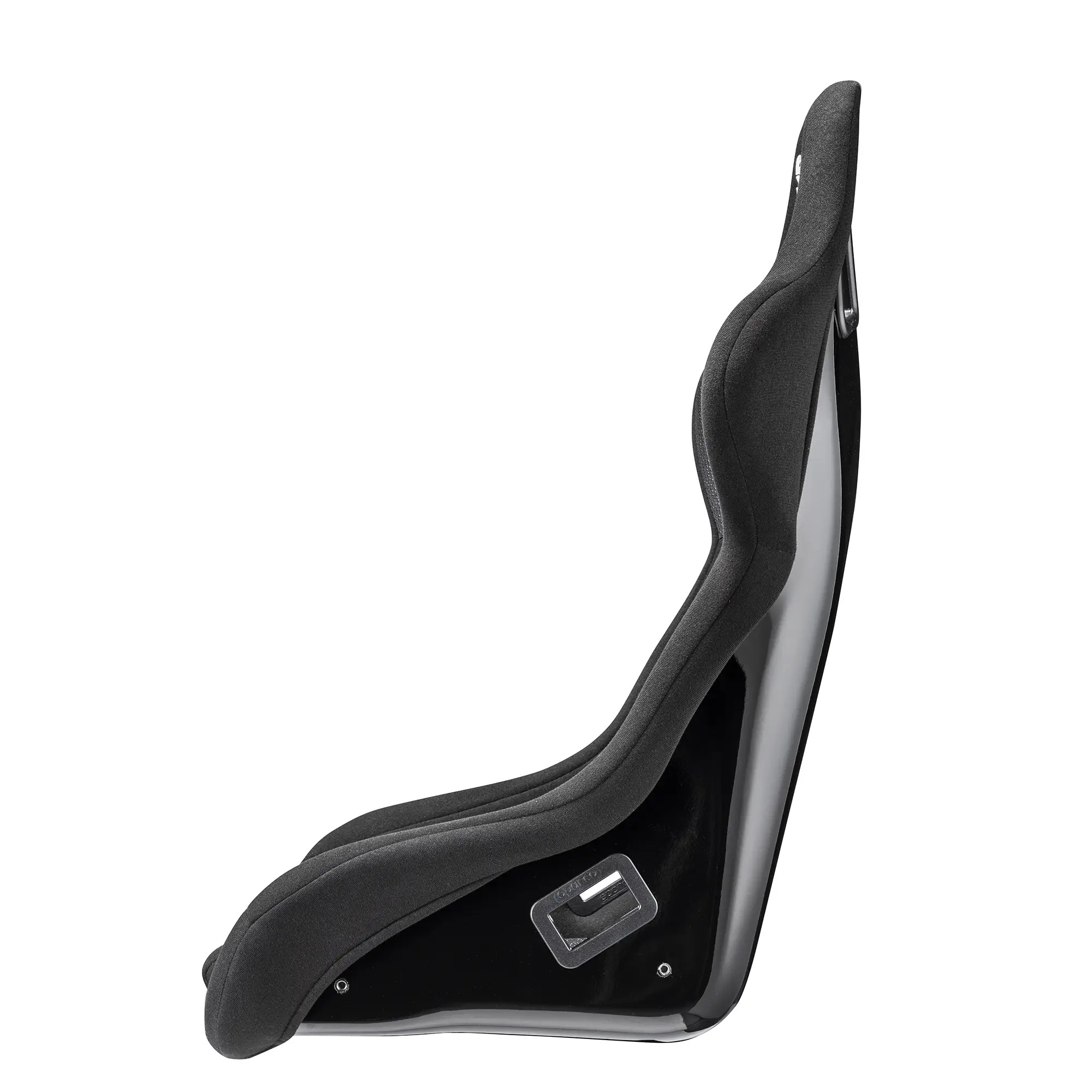
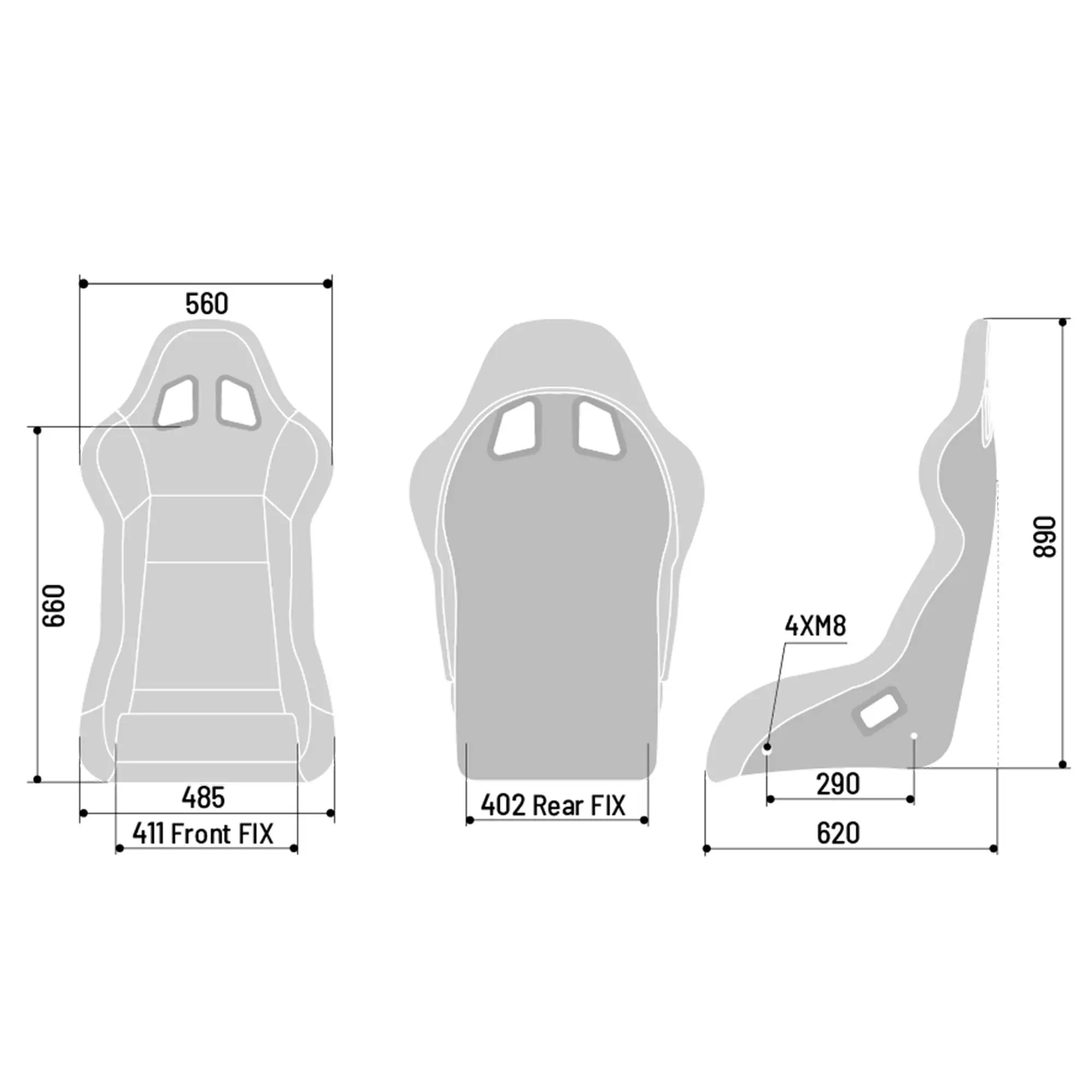
A competition-grade fixed-back bucket engineered around Sparco’s advanced QRT (Quick Resin Technology) composite shell. This proprietary manufacturing process uses aerospace-inspired resin flow control to produce an ultra-lightweight yet exceptionally rigid fibreglass structure — significantly lighter than a traditional fibreglass seat at a lower cost than equivalent carbon-fibre designs. The ergonomic profile prioritises a natural driving position with one of the greatest back-angle rakes in the Sparco range, helping reduce driver fatigue over long sessions and improve cockpit feel. Integrated lateral and shoulder non-slip fabrics help keep the driver securely planted under dynamic inputs, while FIA 8855-1999 approval supports motorsport use up to competitive levels. Available in multiple sizes (Small, Medium, Large, XL) to better match driver physique and cockpit space, with side-mount compatibility for typical race harness setups.
Weight: 7.3-7.9kg – Third lightest in this listing.
Price (£570.00 – February 2026) – Buy here
Other confirmed seats that fit
Sparco Sprint
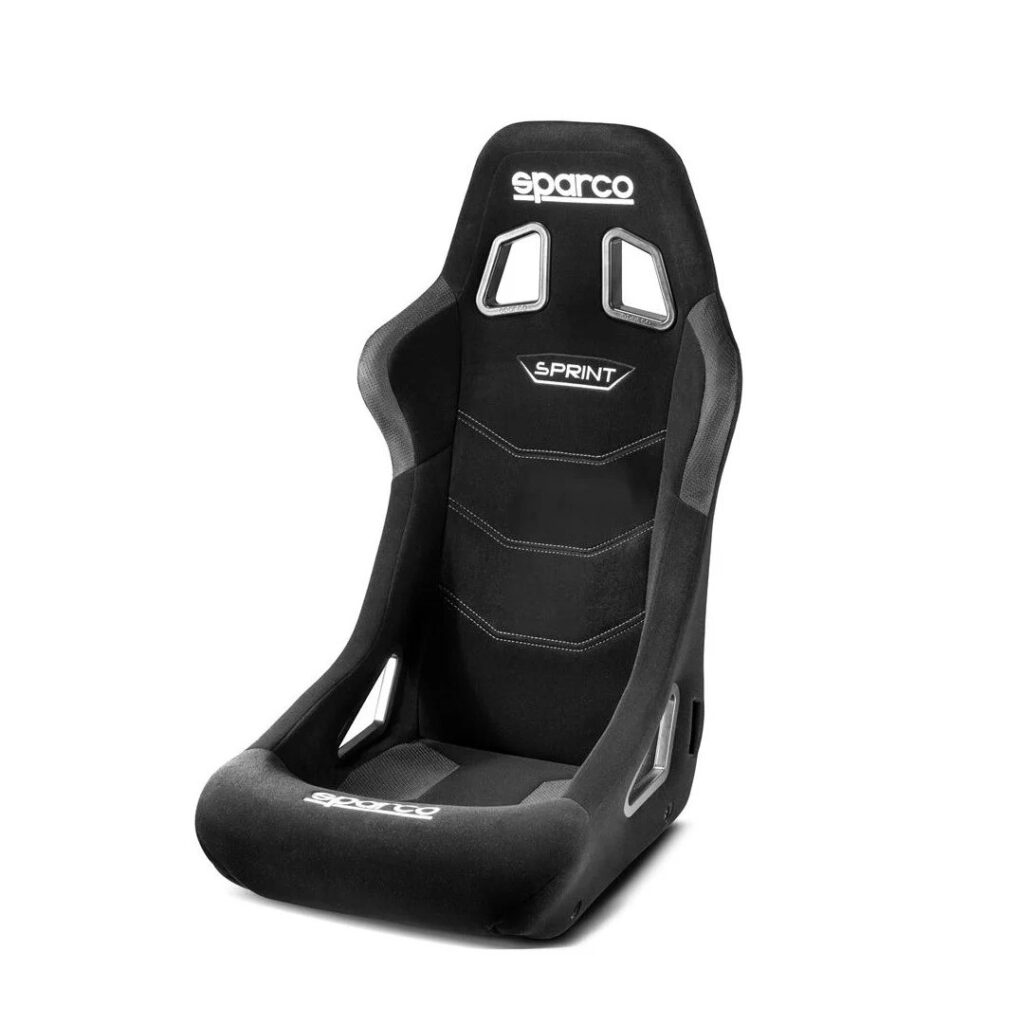
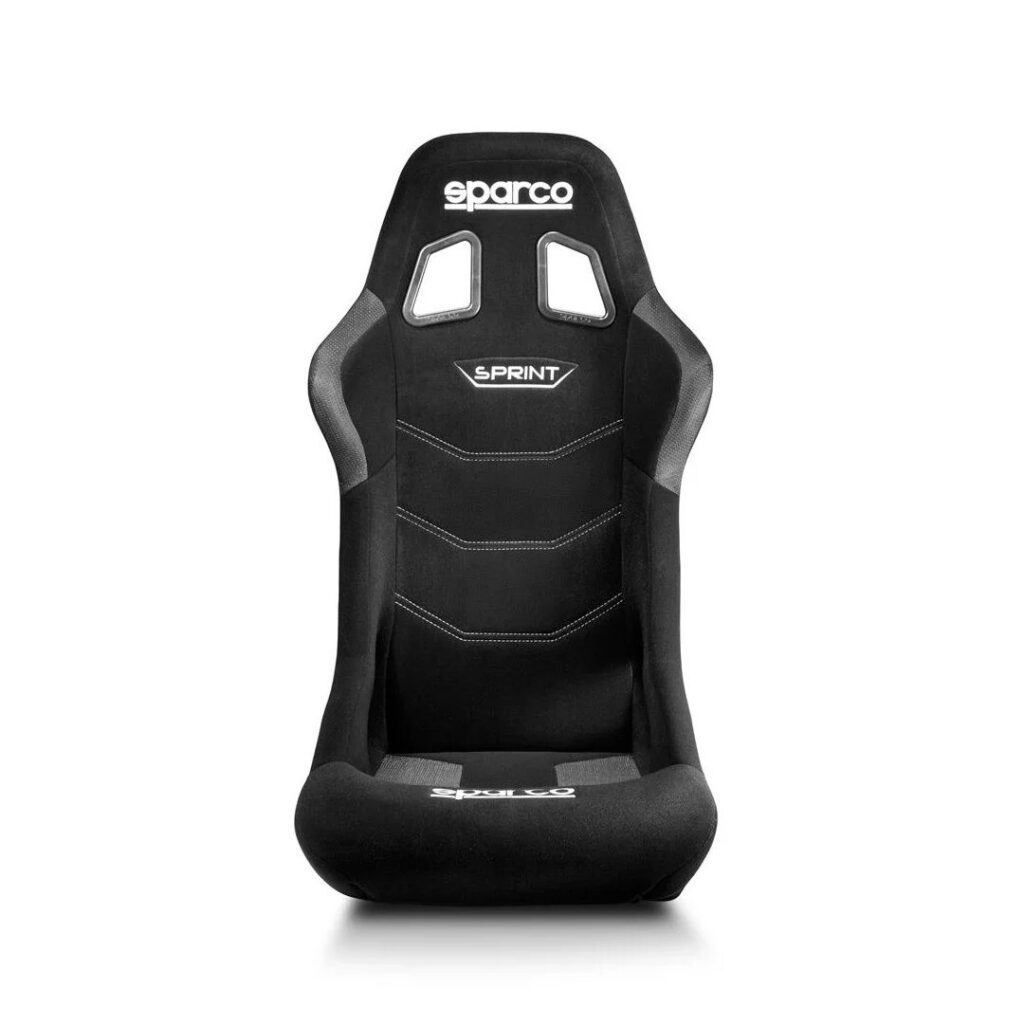
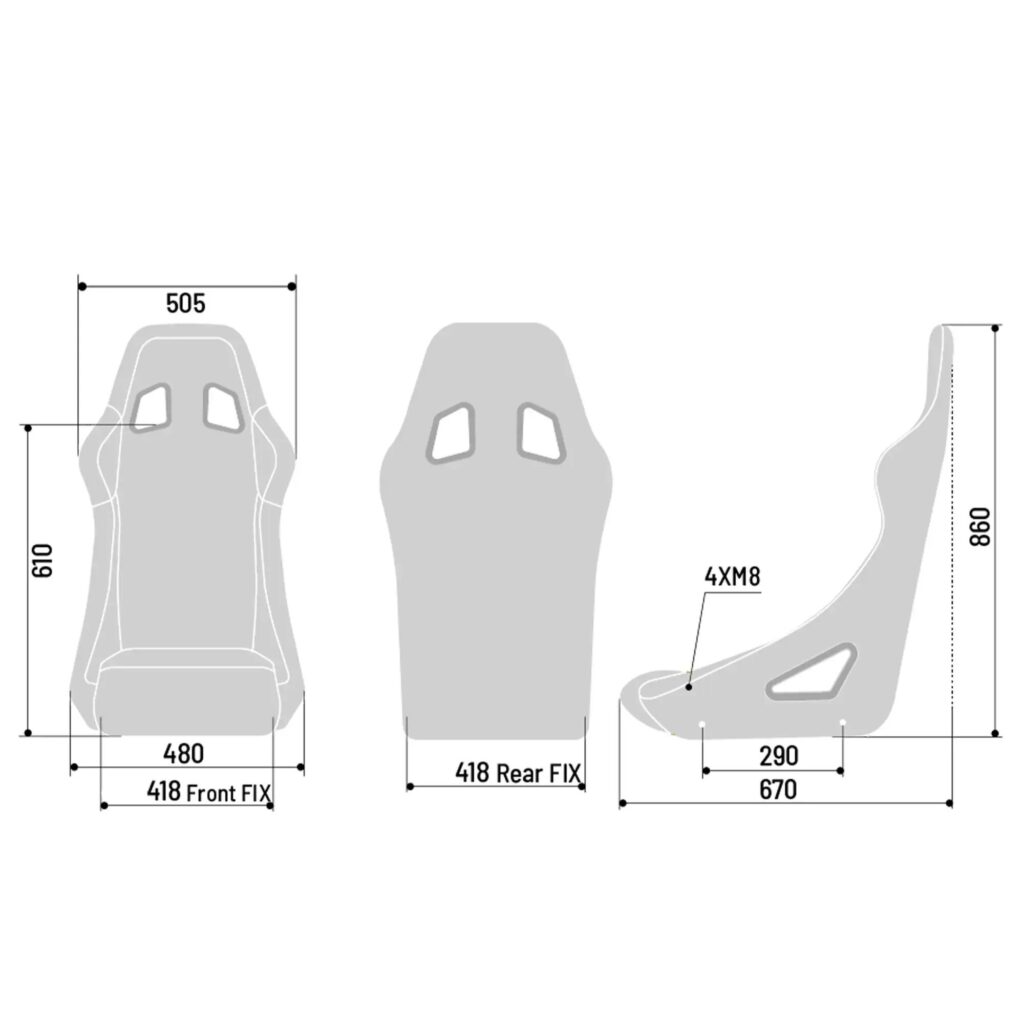
A budget-oriented fixed-back bucket built around a robust steel shell. It offers a performance-inspired profile with modest bolstering and basic padding. The lack of factory-integrated lumbar support and limited cushioning means it’s better suited to shorter drives or occasional spirited use rather than extended track sessions. When fully mounted with sliders and subframes, its heavier construction can be noticeable compared to composite alternatives.
Weight: 9.7–11 kg (Verified weight) – A mid-weight seat in this comparison. Heavier than composite buckets like Mirco or Lotus seats, but lighter than traditional tubular steel designs.
Price: £252.00 (February 2026) – Buy here
Corbeau Club Sport
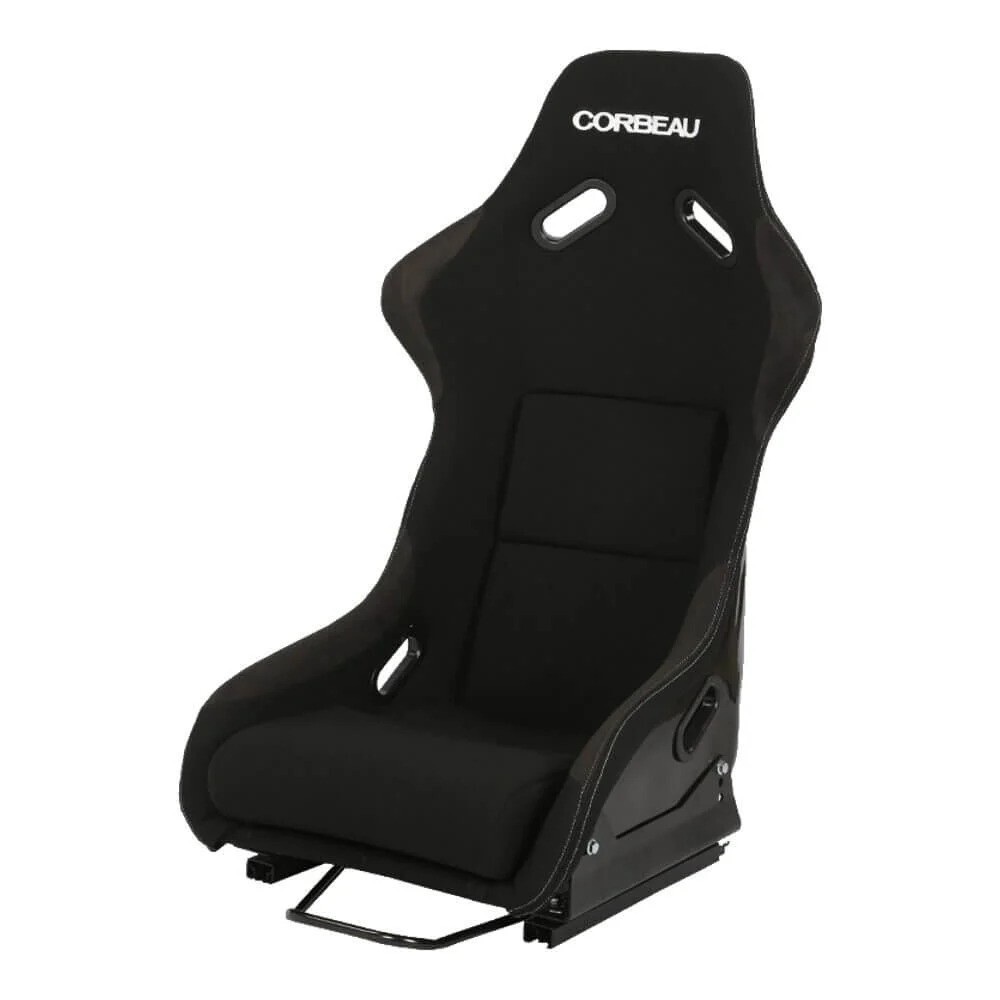
A value-driven fixed-back seat that is slightly more substantial in padding than entry-level alternatives. It is designed to provide better everyday comfort while still offering a firm seating position that helps control body movement under moderate cornering forces. The shell and foam shape are broadly accommodating, and the availability of standard mounts and sliders (when supplied) makes installation straightforward for street cars.
Weight: Not stated by manufacturer (Non-verified weight) – Cannot be accurately placed in the light-to-heavy ranking without official figures.
Price: DISCONTINUED (February 2026)
Corbeau Pro Sport
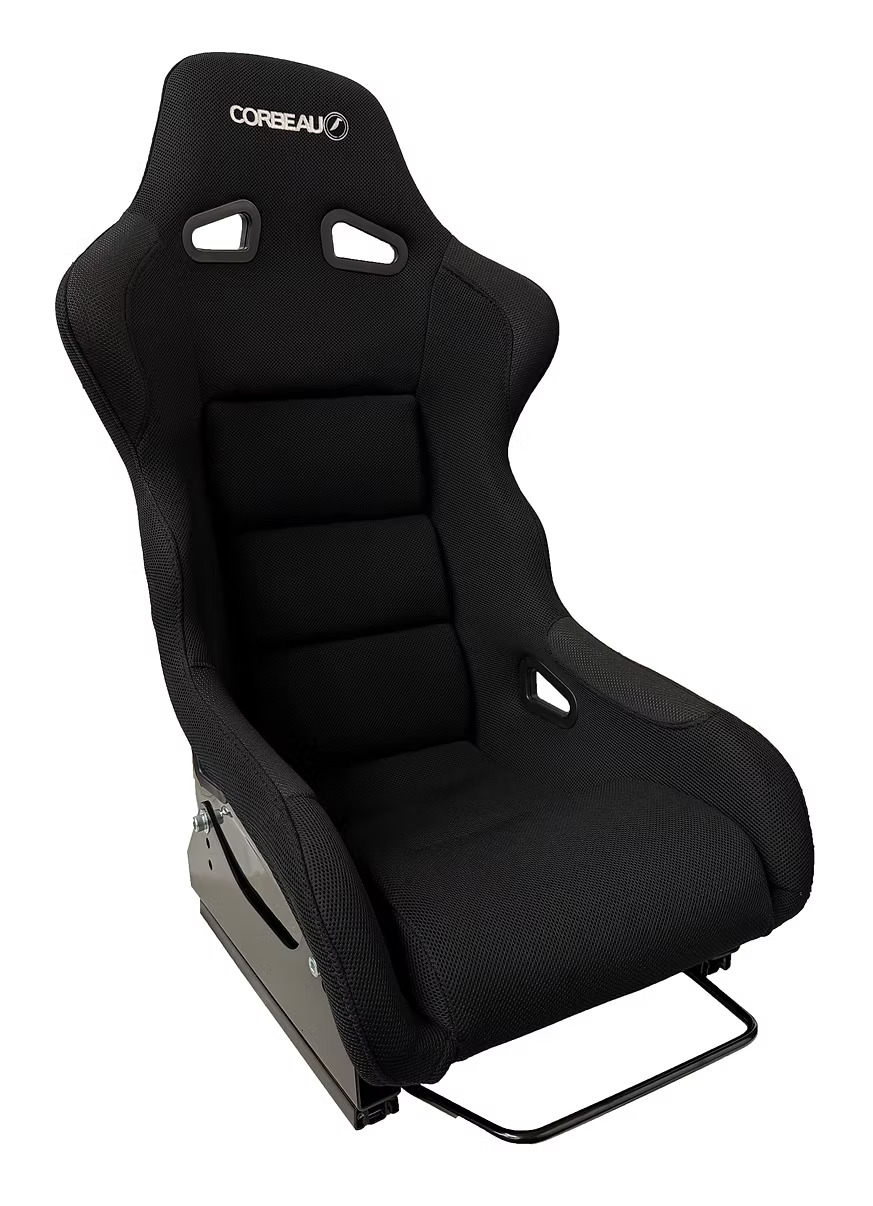
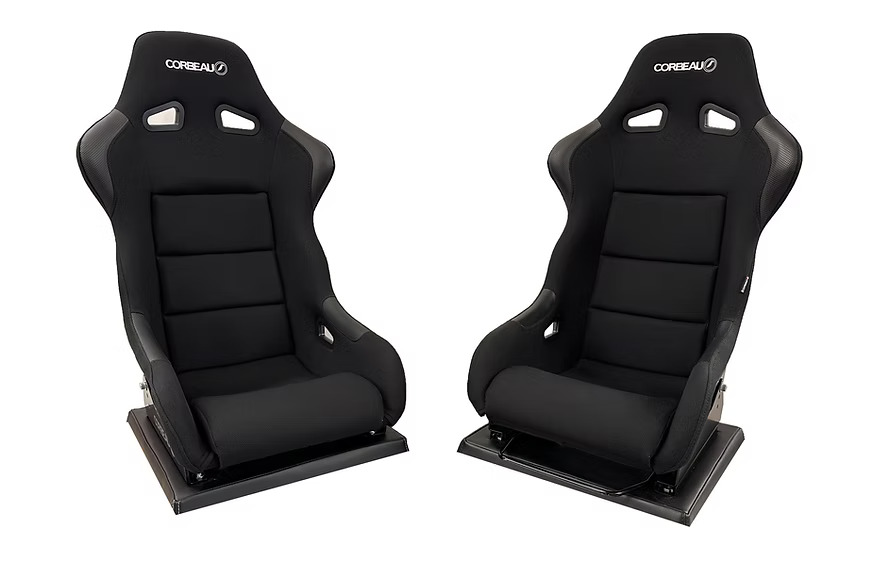
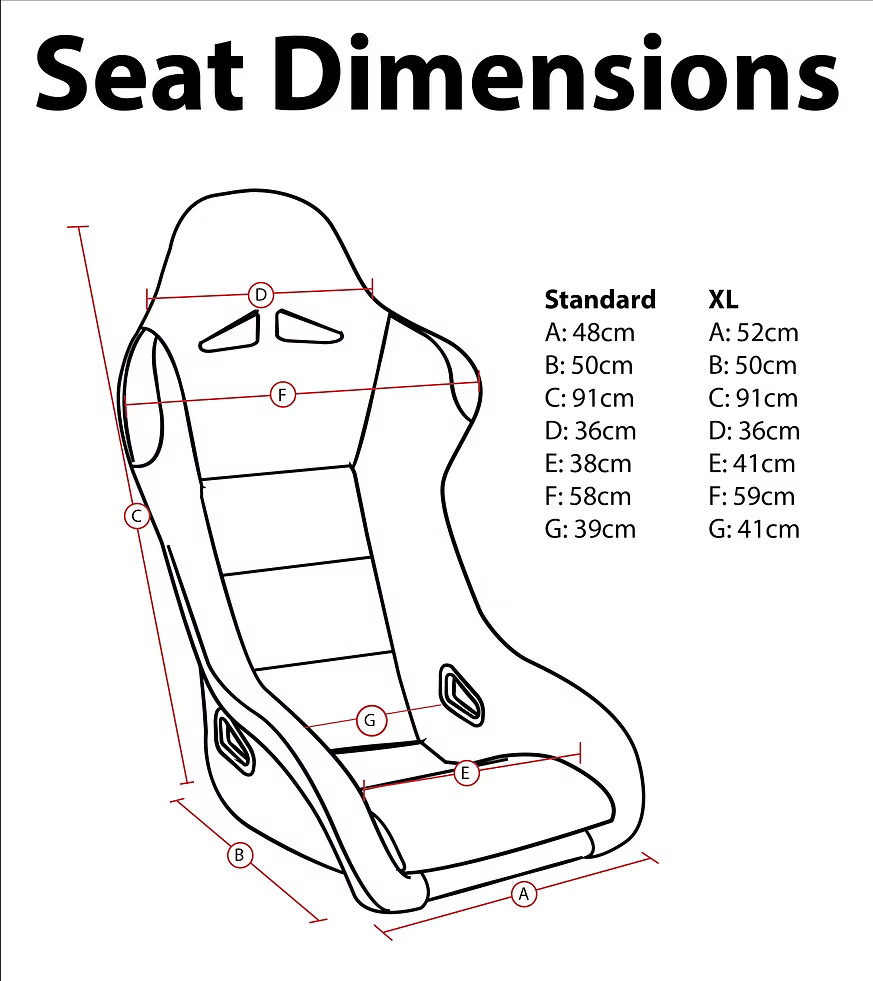
A modernised fixed-back bucket developed as the successor to Corbeau’s older basic sport seats. Built in the UK using composite construction methods similar to higher-spec models, it is supplied as a complete package with side mounts and double-locking runners included. Available in standard and XL sizes (up to approximately 36–38″ waist), it offers a balance of daily comfort and occasional track-day capability despite lacking FIA homologation. Optional lumbar support improves long-distance comfort.
Weight: Not stated by manufacturer (Non-verified weight) – Weight cannot be compared reliably within this list.
Price: £262.00 (February 2026) – Buy here
Mirco GT
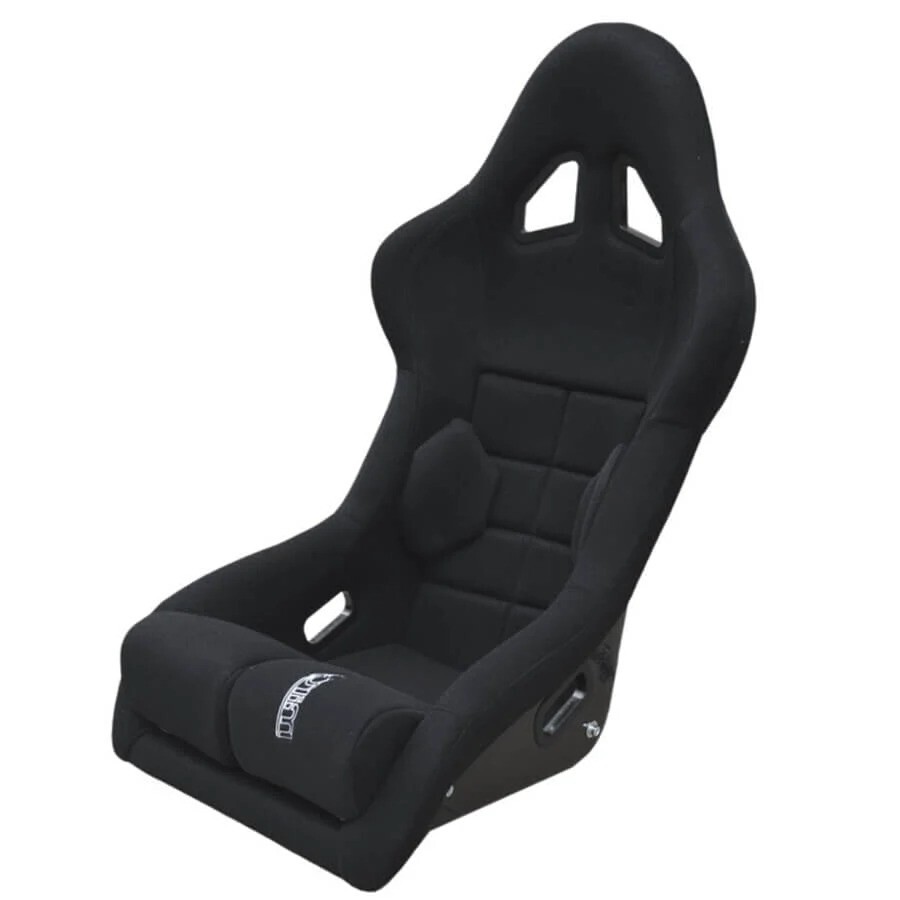
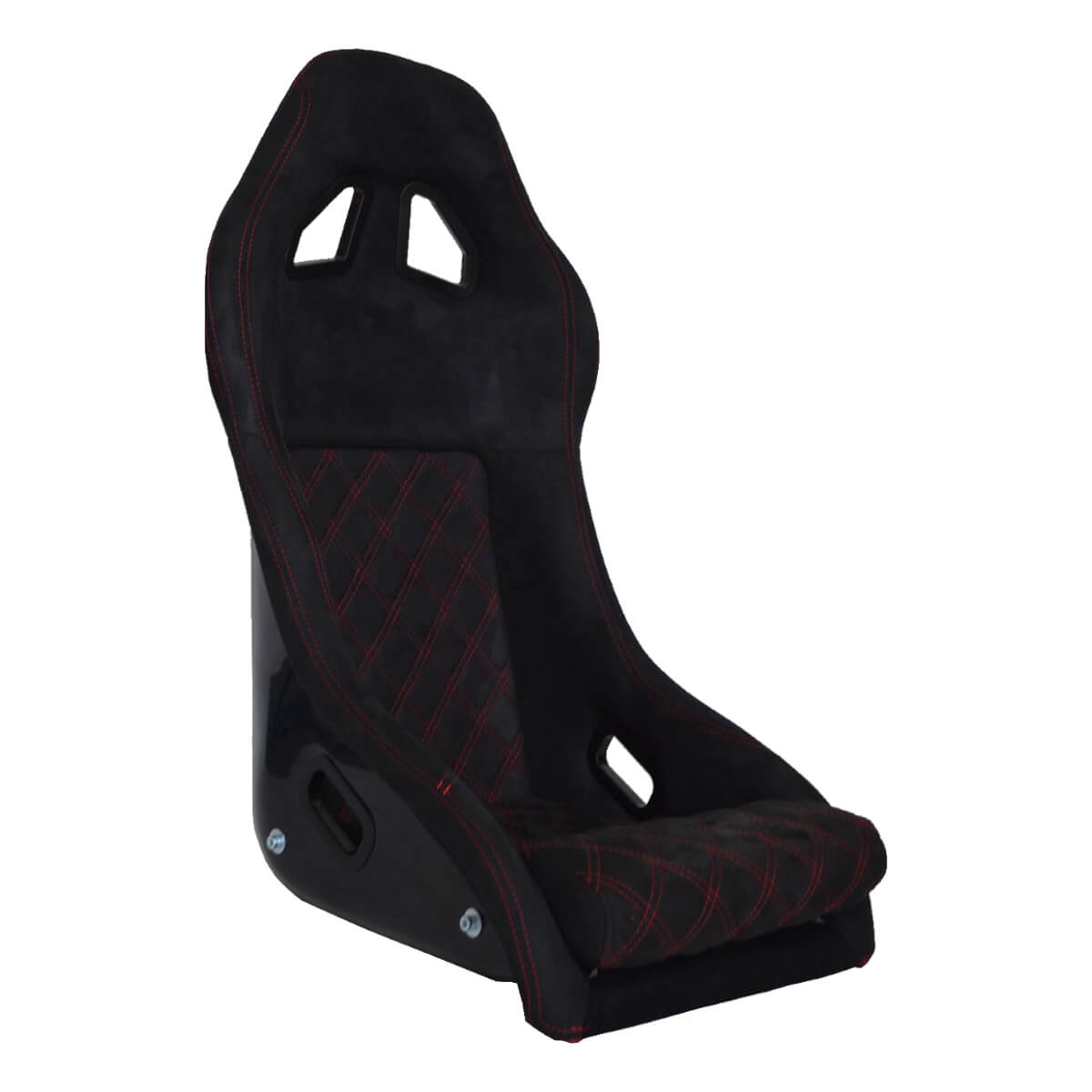
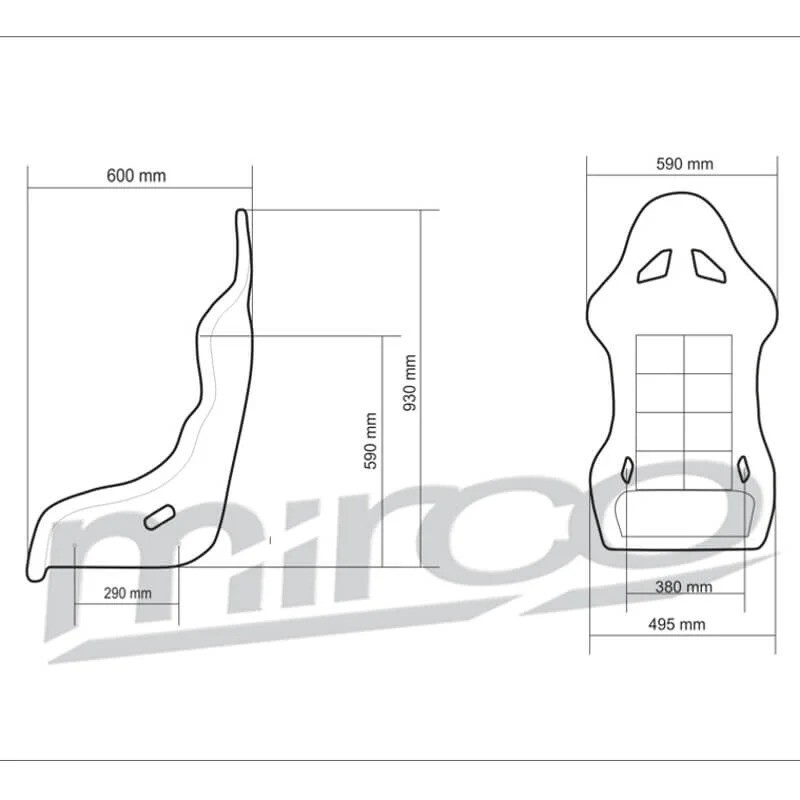
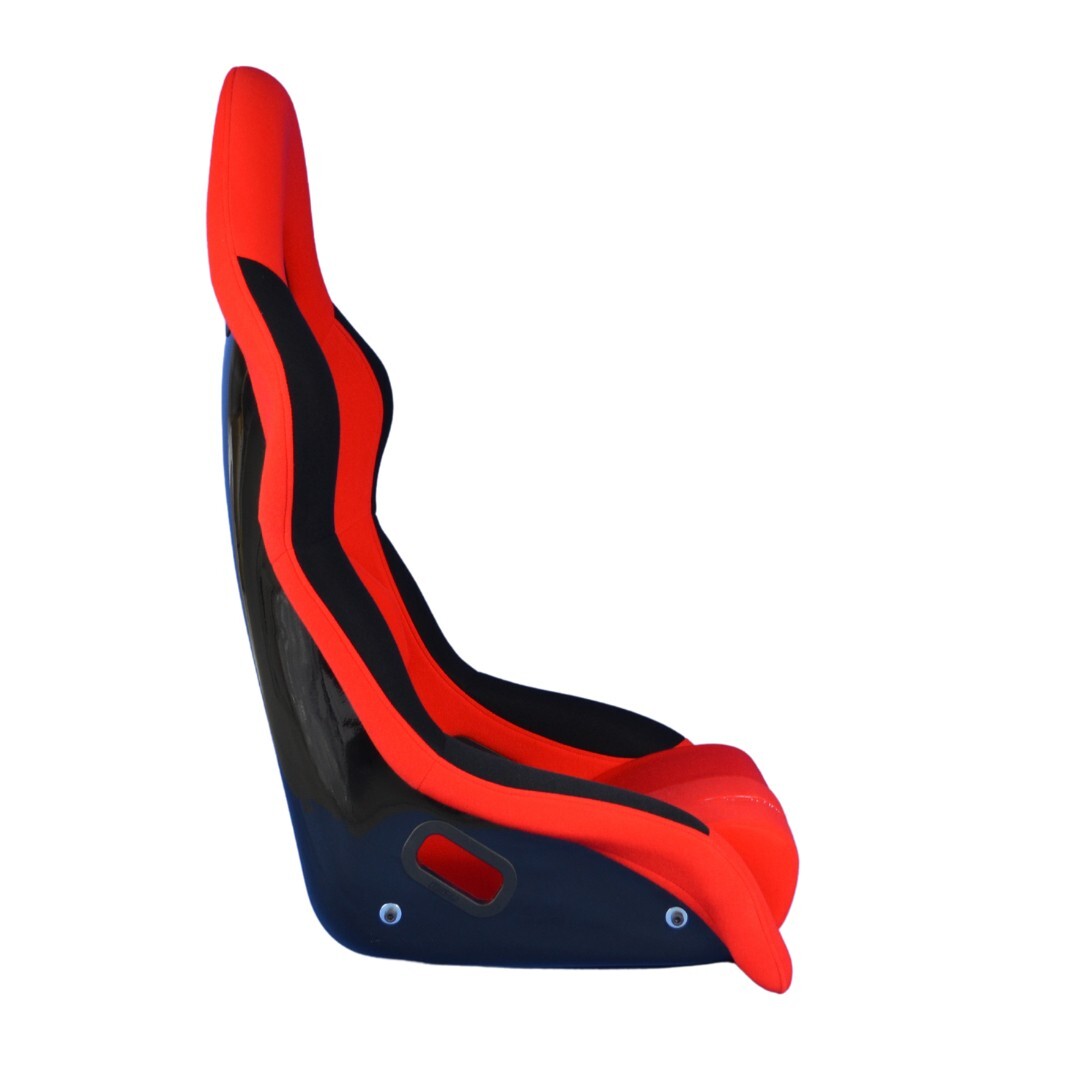
A higher-tier fixed-back bucket that prioritises ergonomic support, particularly under-thigh contact. Its cushion shaping and foam density deliver noticeably better comfort for longer drives and technical circuits. The shell and padding design strike a balance between lower-body support and an engaging driving position, making it suitable for drivers who want both comfort and control.
Weight: 8.2 kg (Verified weight) – One of the lightest seats in this entire listing, lighter than most budget and mid-tier fixed-back options.
Price: £380.00 (February 2026) – Buy here
Mirco RTS-2
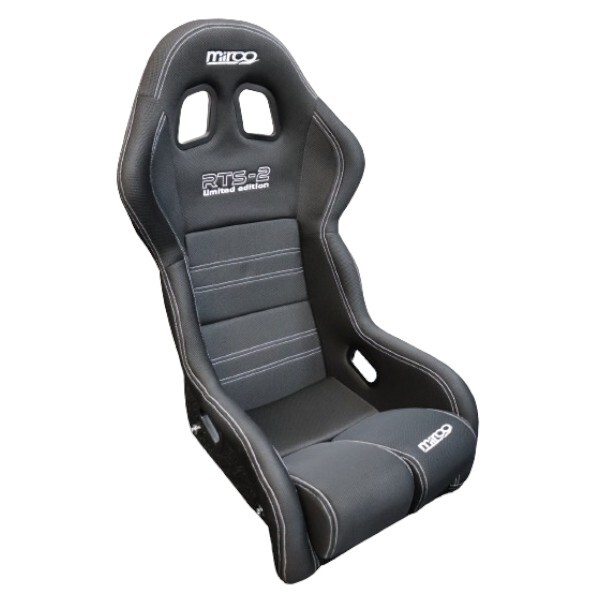
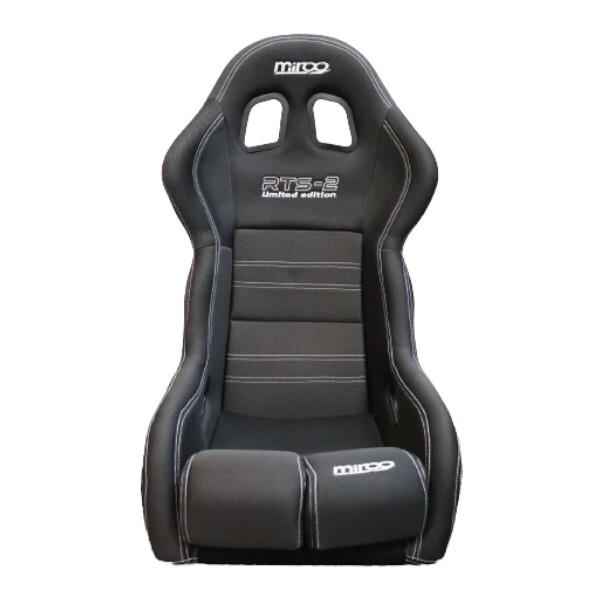
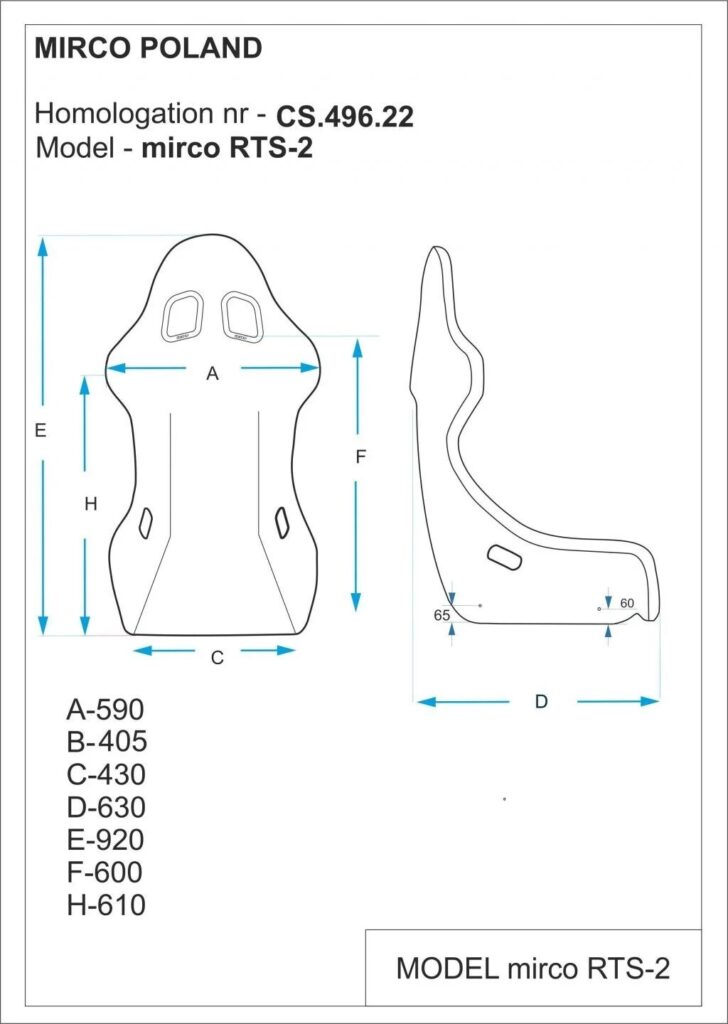
A performance-oriented fixed-back bucket that builds on the Mirco GT’s design by increasing lateral containment and shell rigidity. It is engineered for more demanding driving environments where keeping the driver securely positioned is a priority. Padding and bolster placement favour control first, with comfort remaining competitive for its class.
Weight: 8.8 kg (Verified weight) – Still very lightweight, but slightly heavier than the Mirco GT due to increased support and stiffness.
Price: £400.00 (February 2026) – Buy here
Sabelt Racer Duo
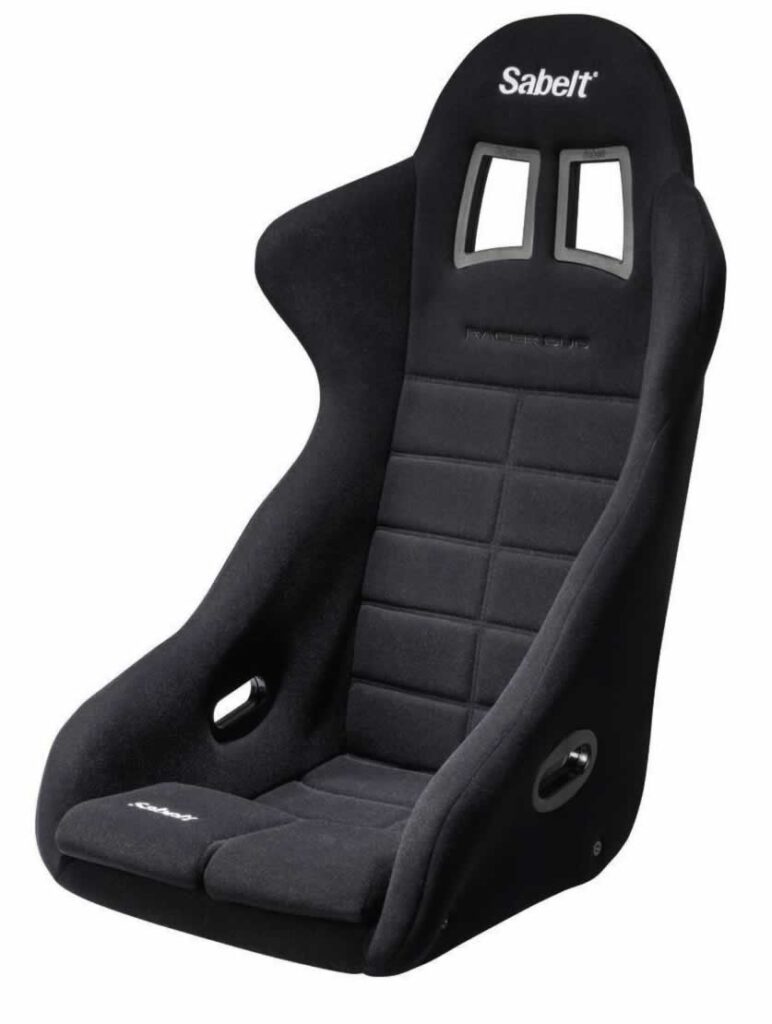
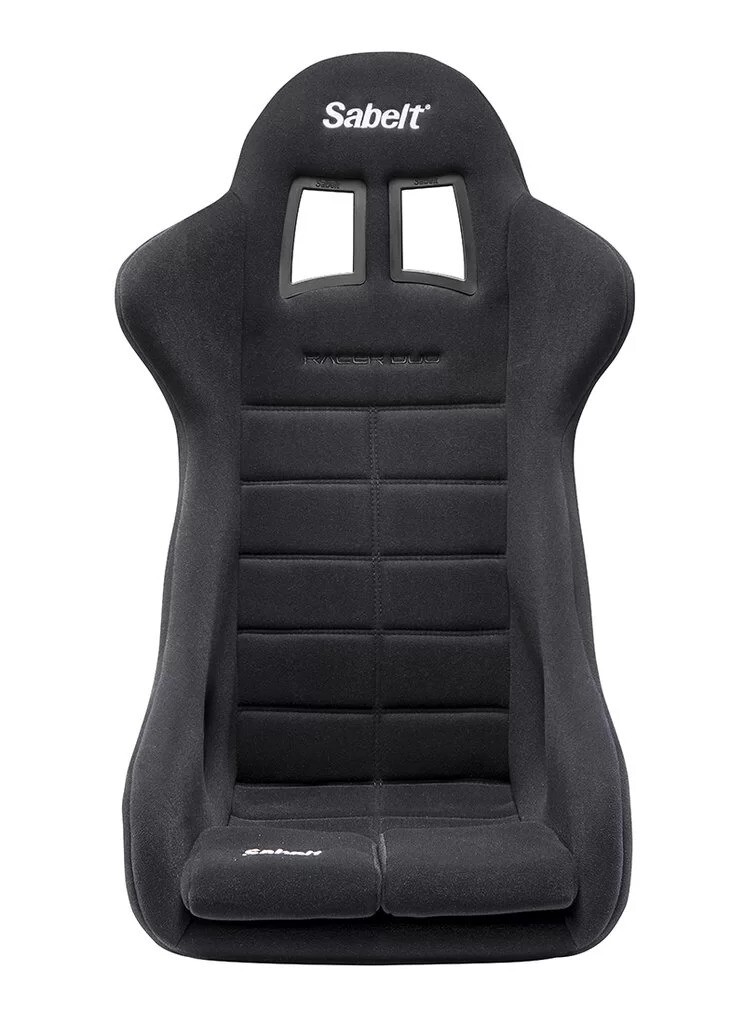
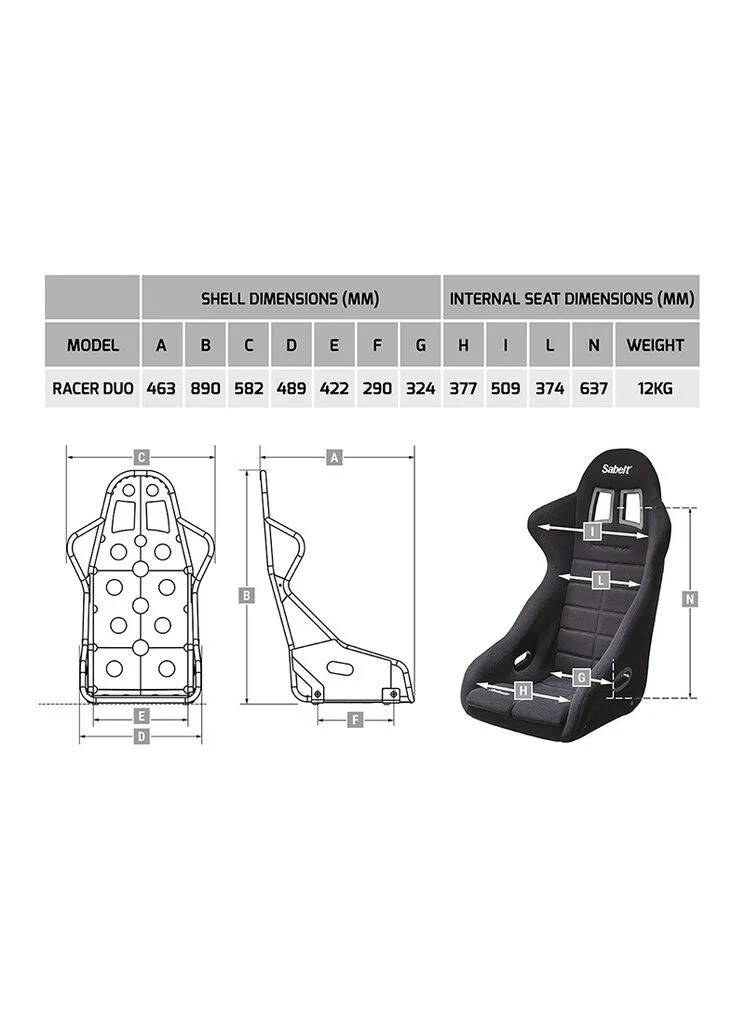
Originally released as a very affordable option, particularly for taller drivers. Its low cost was achieved by using a tubular steel frame rather than a composite shell. While durable and accommodating, this construction results in a significantly higher mass compared to modern composite fixed-back seats.
Weight: 12–15 kg (Verified weight) – One of the heavier seats in this list, substantially heavier than any composite-shell alternative even before mounts are considered.
Price: DISCONTINUED (February 2026)
Sabelt GT-3
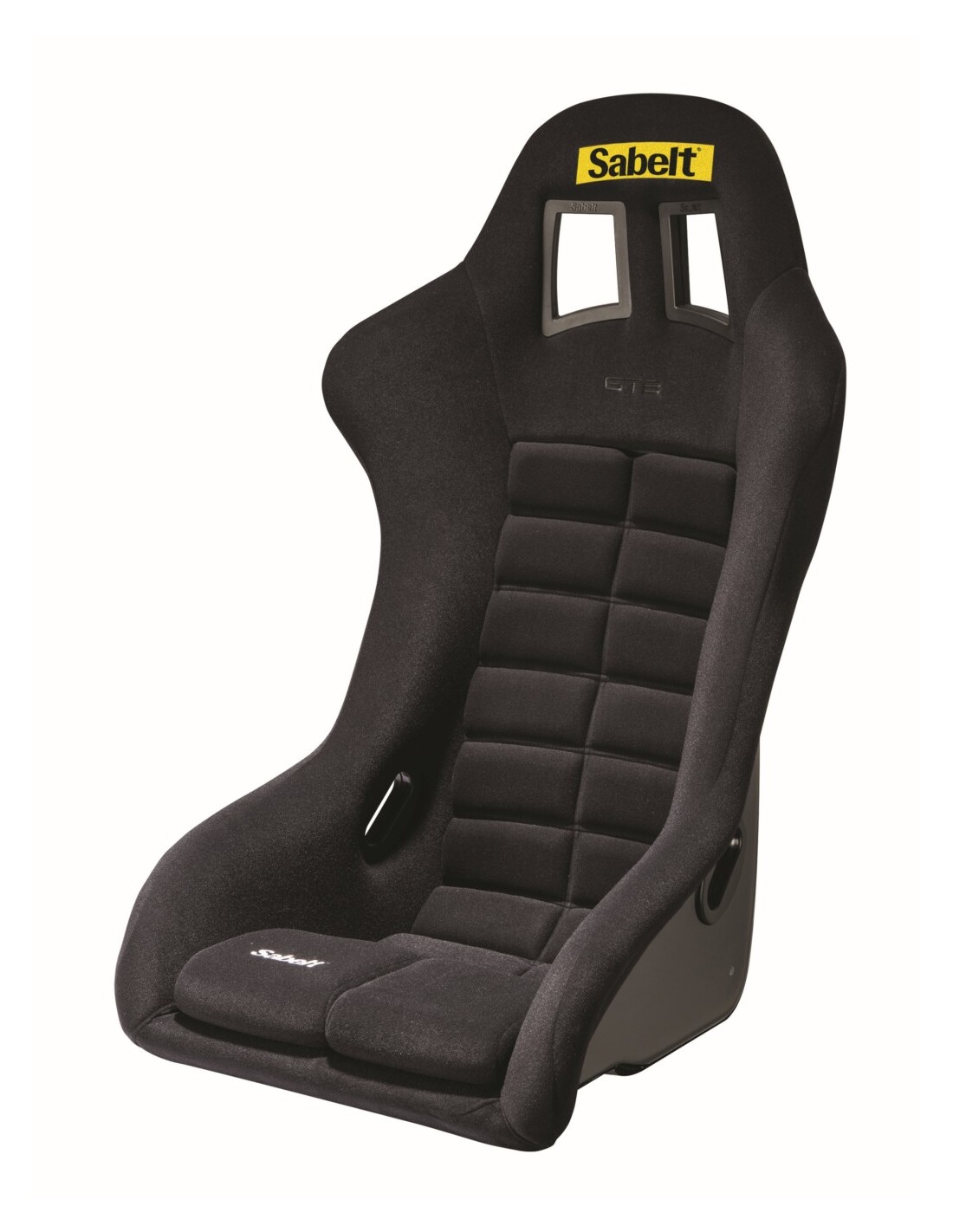
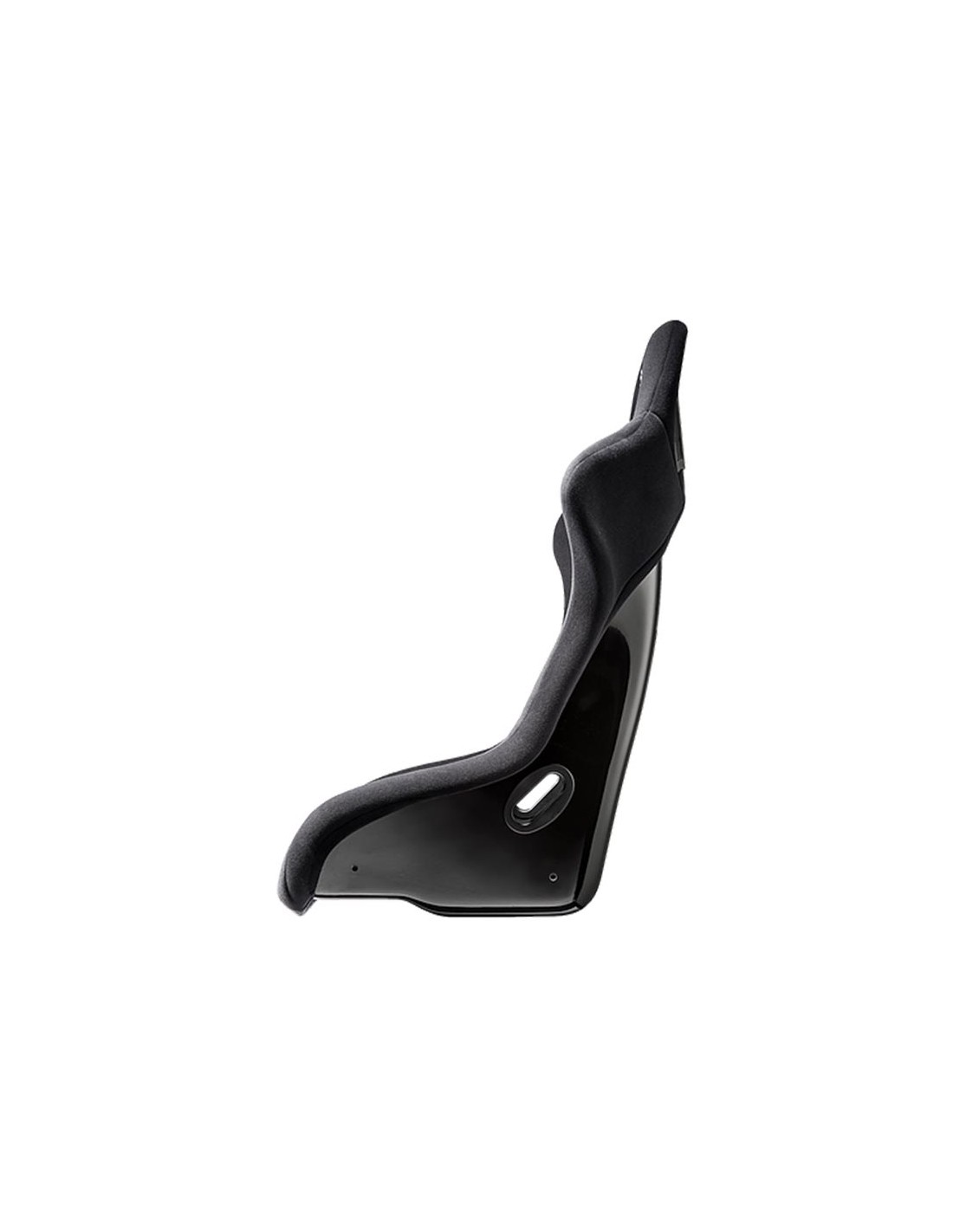
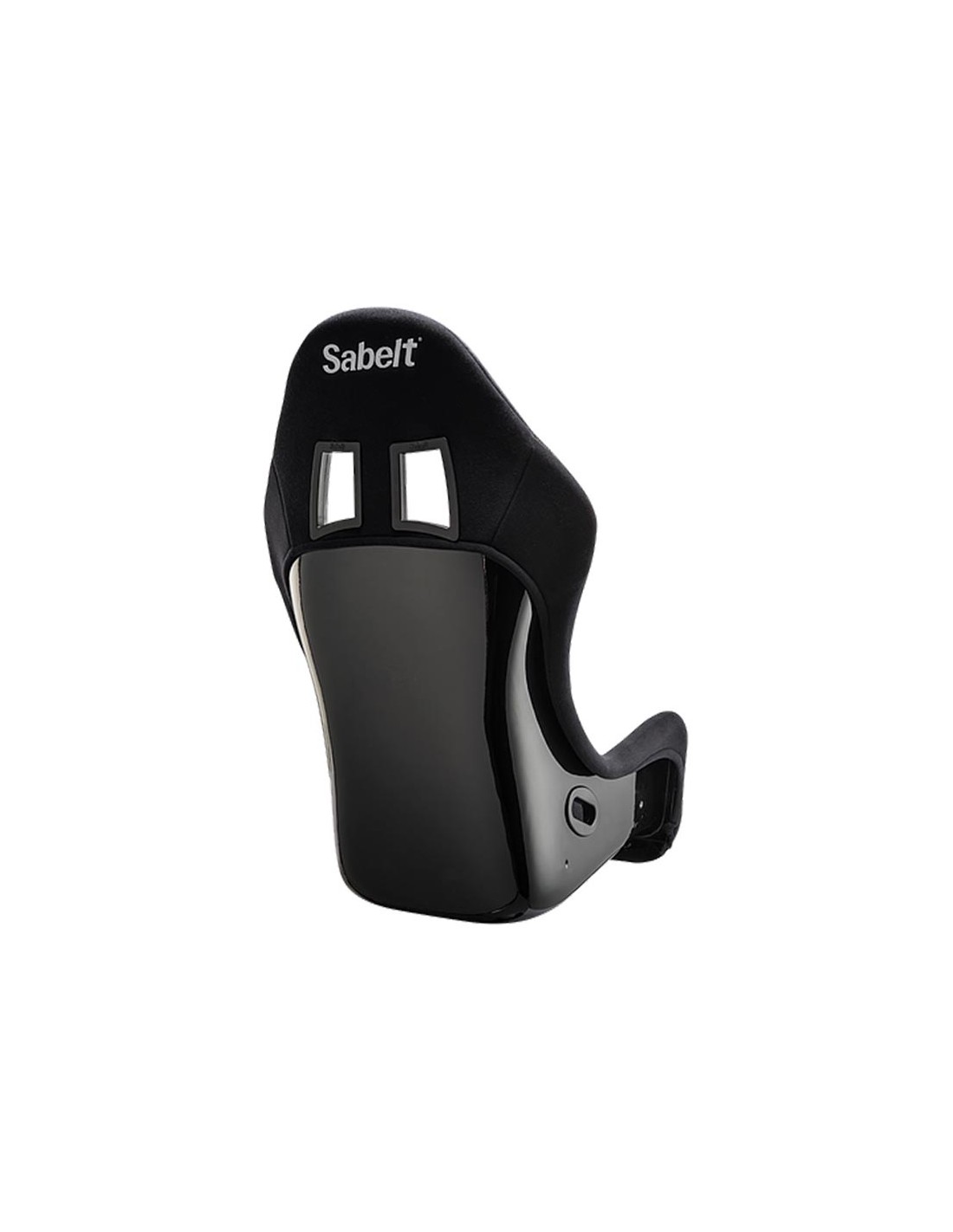
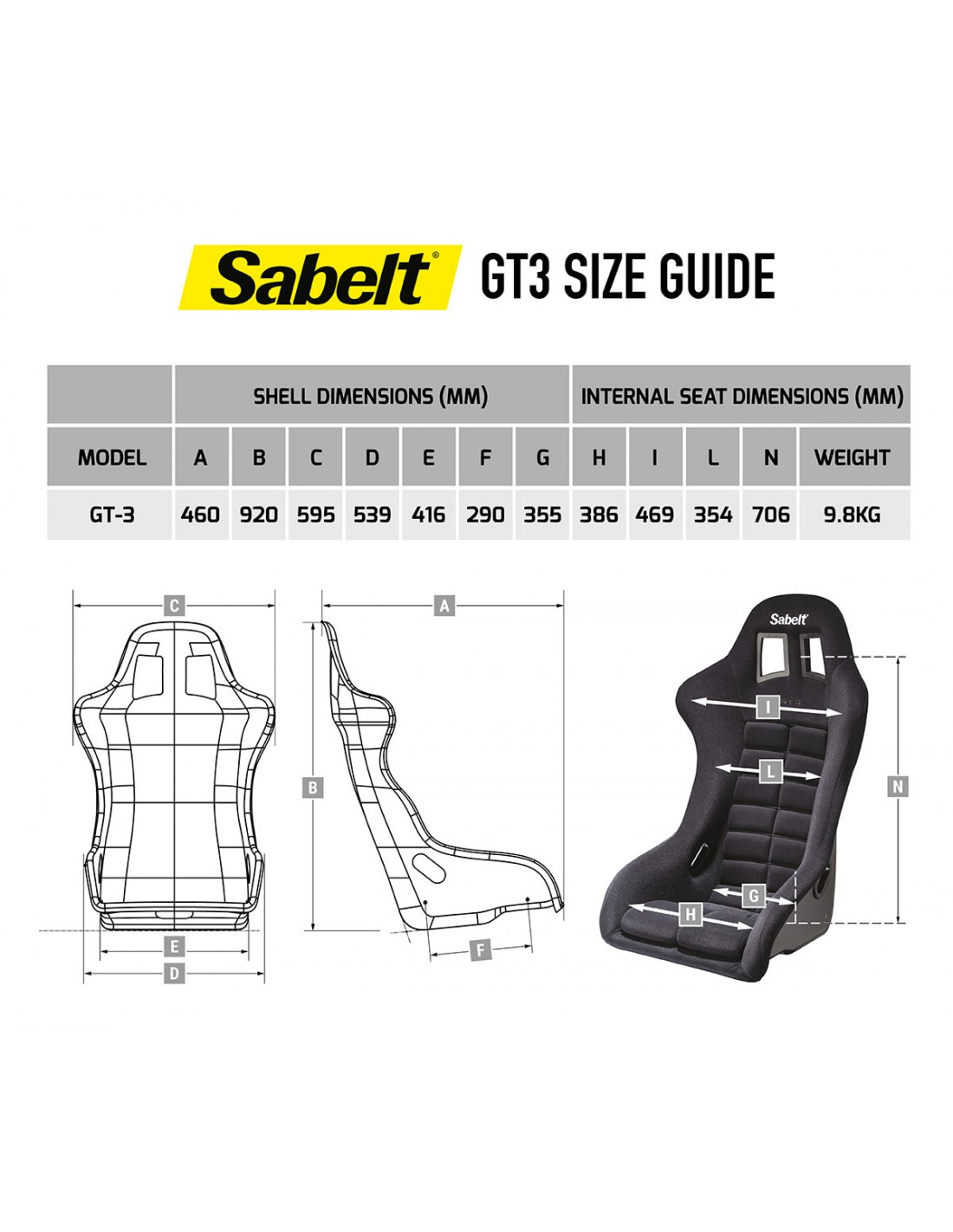
The successor to the Racer Duo in Sabelt’s older lineup, featuring a one-piece fiberglass shell rather than a tubular steel frame. This design improves rigidity and modernises the seat’s structure, making it more suitable for dedicated performance applications such as race cars.
Weight: 18 kg (Verified weight) – The heaviest seat in this entire list. Despite its composite construction, it outweighs even the Racer Duo based on the provided figures.
Price: £517.00 (February 2026) – Buy here
Option! Party
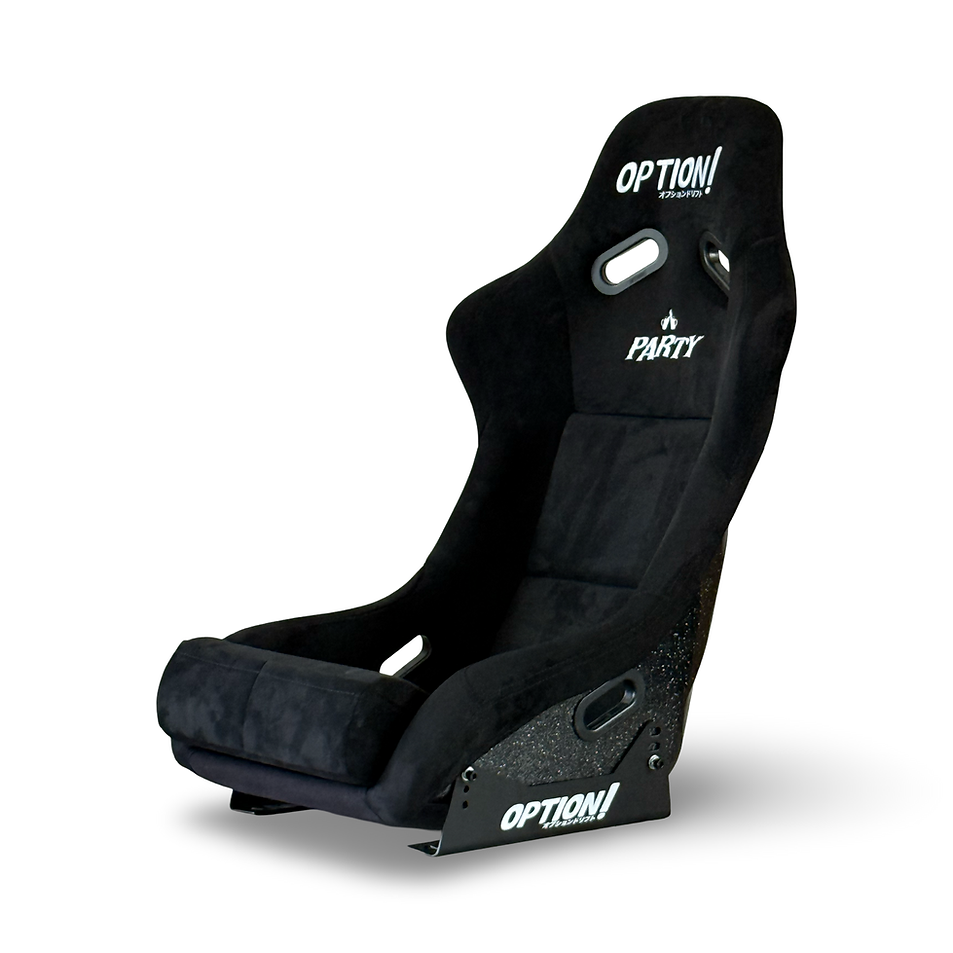
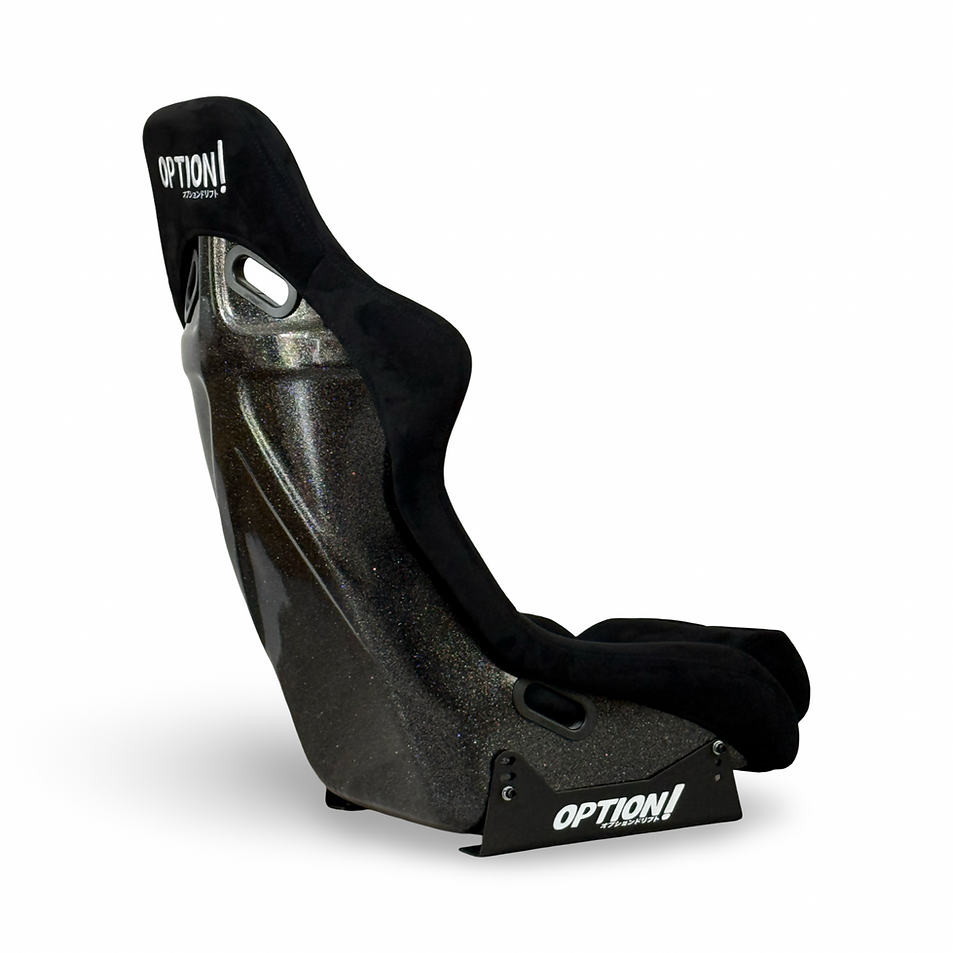
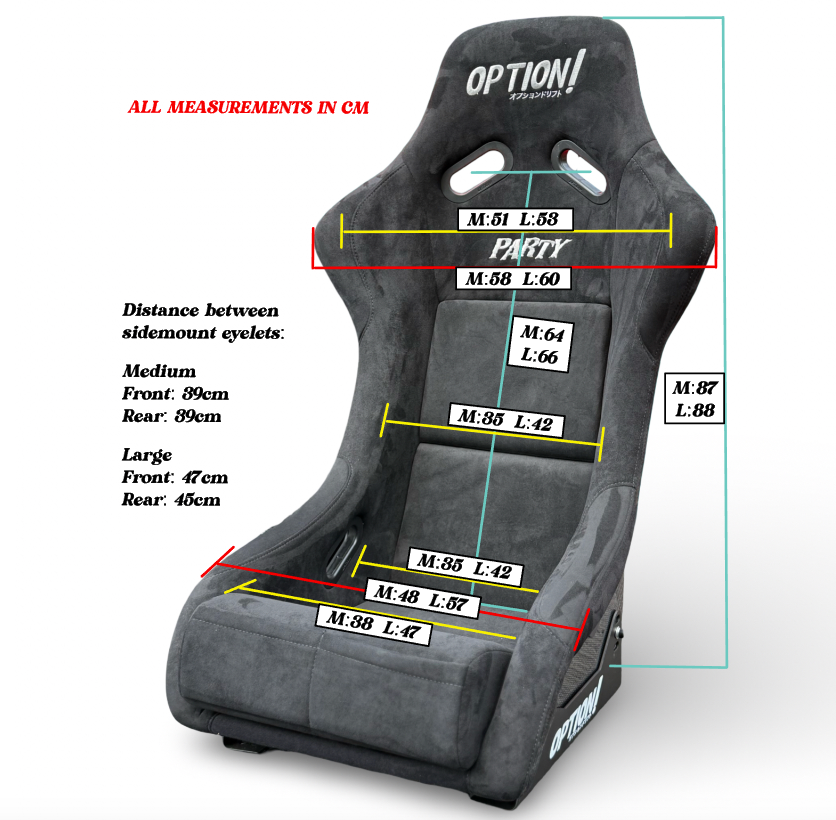
Affordable fixed-back seats constructed using GRP composite methods, resulting in a lightweight shell relative to steel-frame designs. These seats are not FIA certified, making them best suited to daily drivers and amateur track-day use rather than regulated motorsport.
Weight: Not stated by manufacturer (Non-verified weight) – Described as lightweight, but cannot be ranked without official figures.
Price: £480.00 (February 2026) – Buy here
Tillet B6, B7, B8, B9, B10, C1
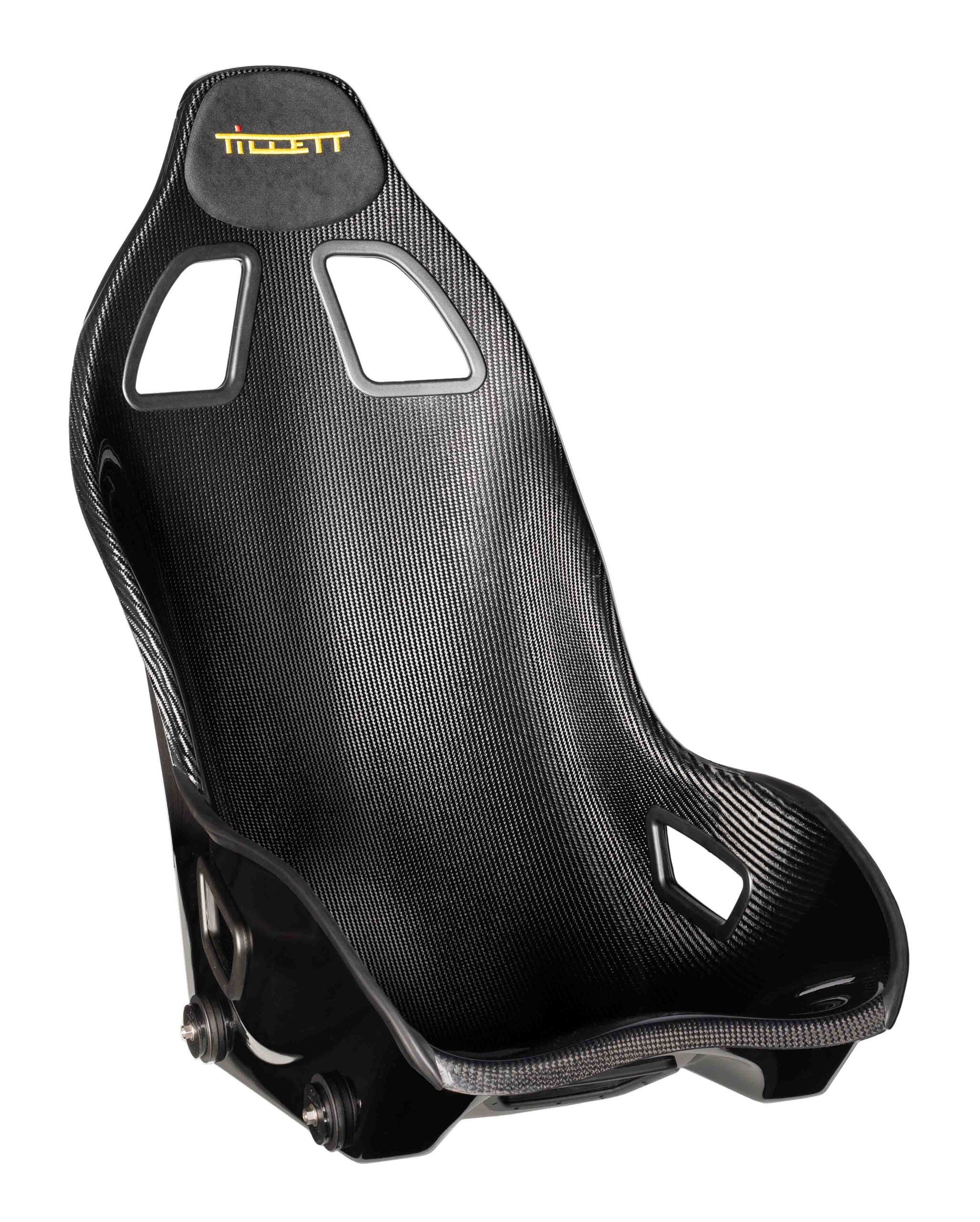
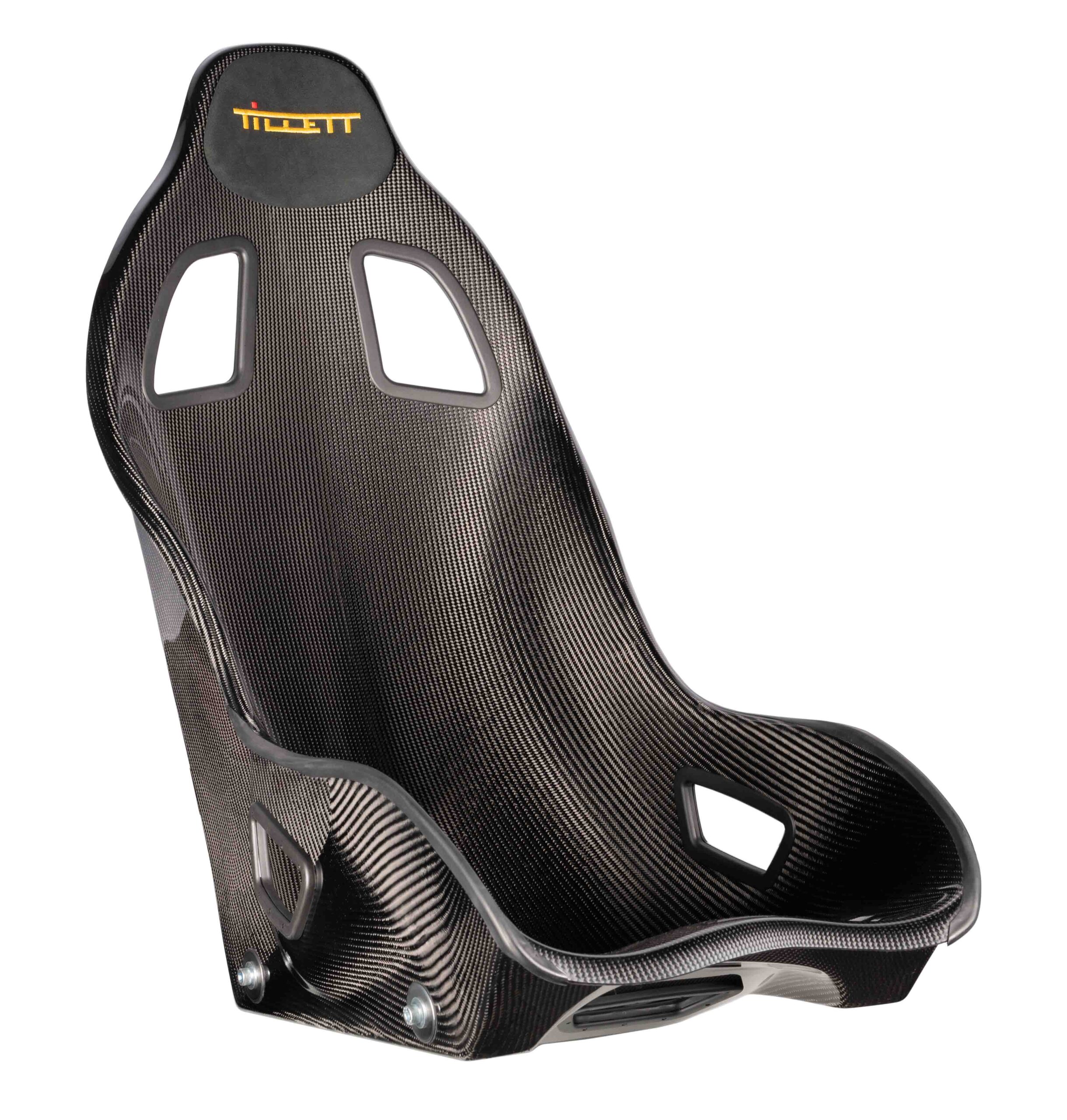
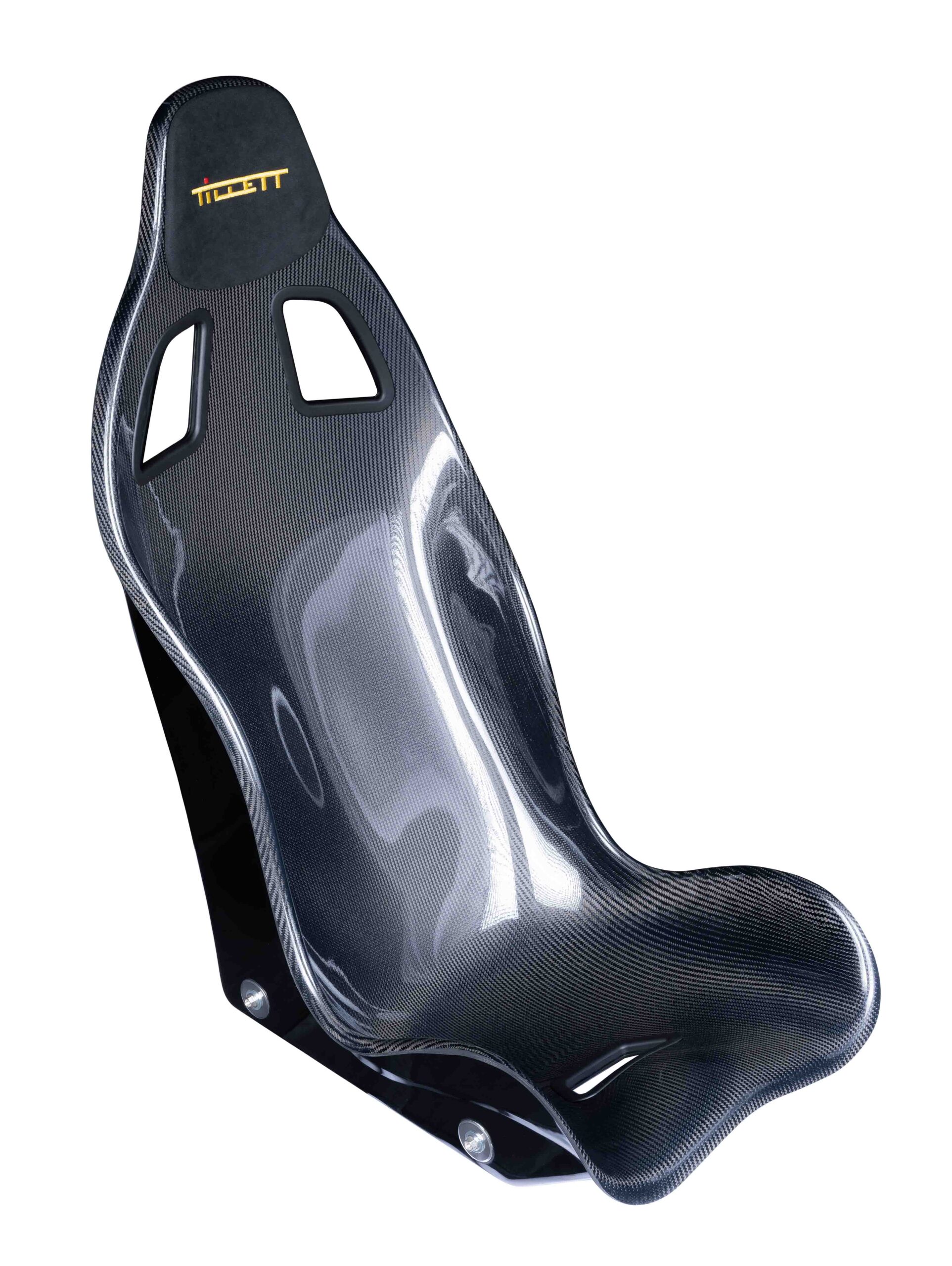
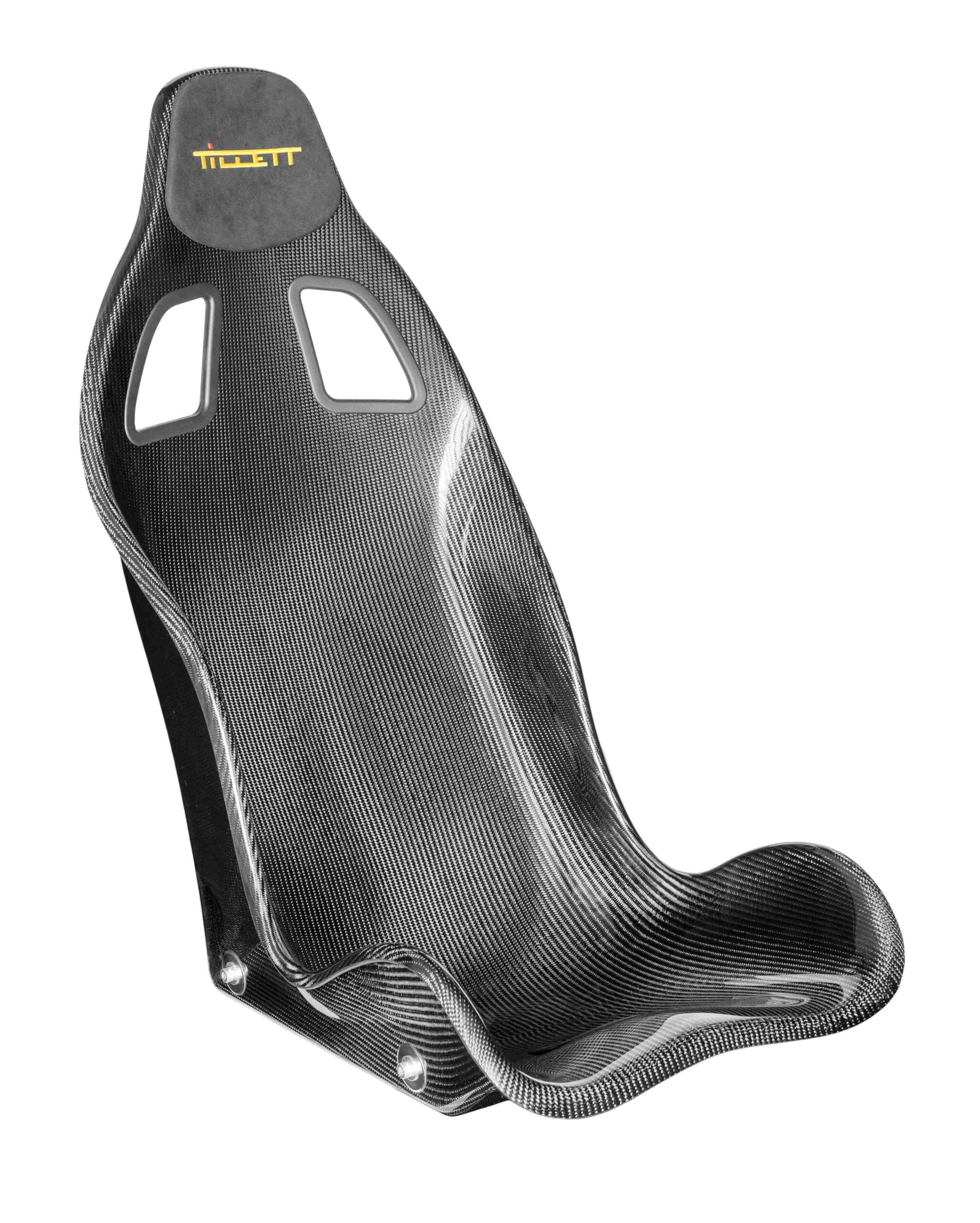
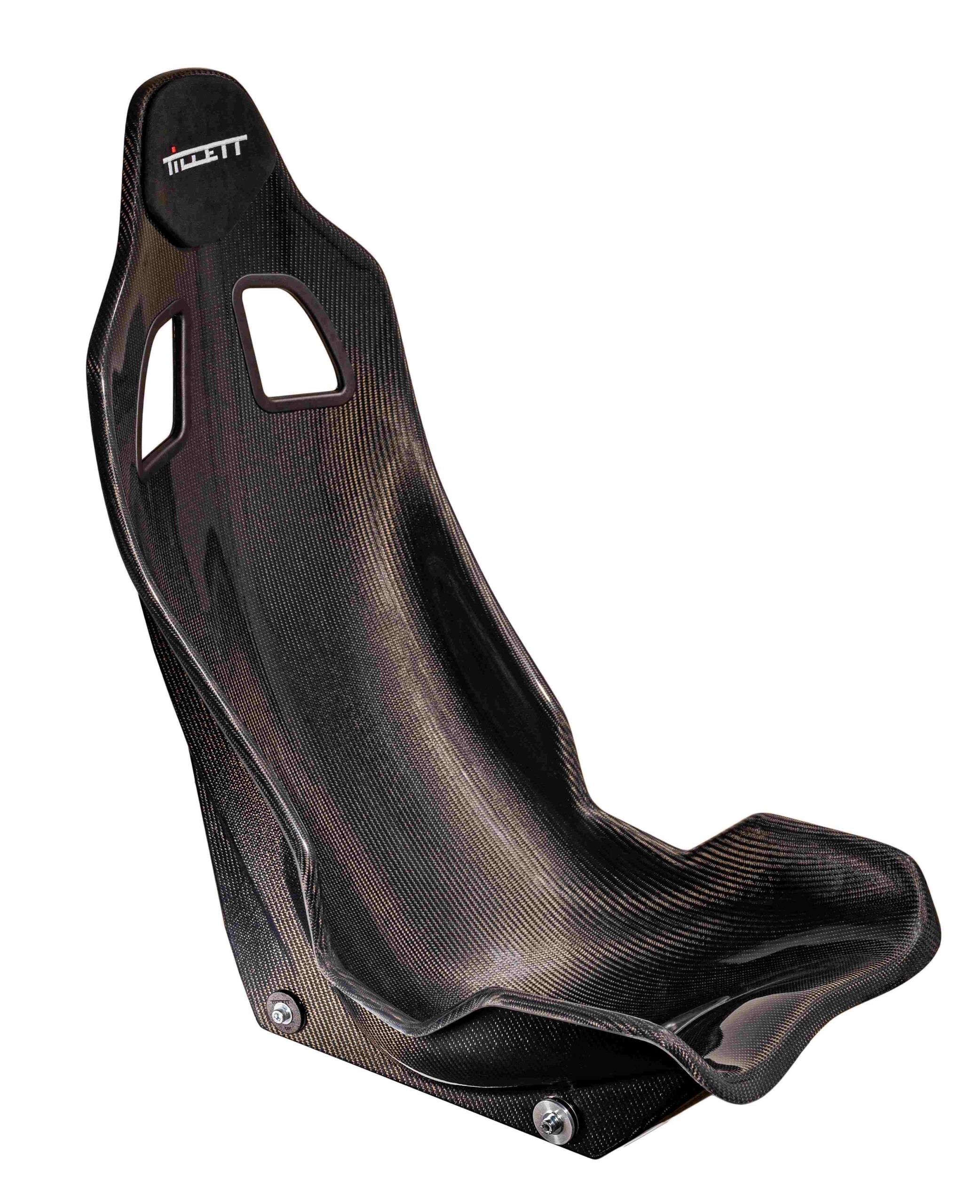
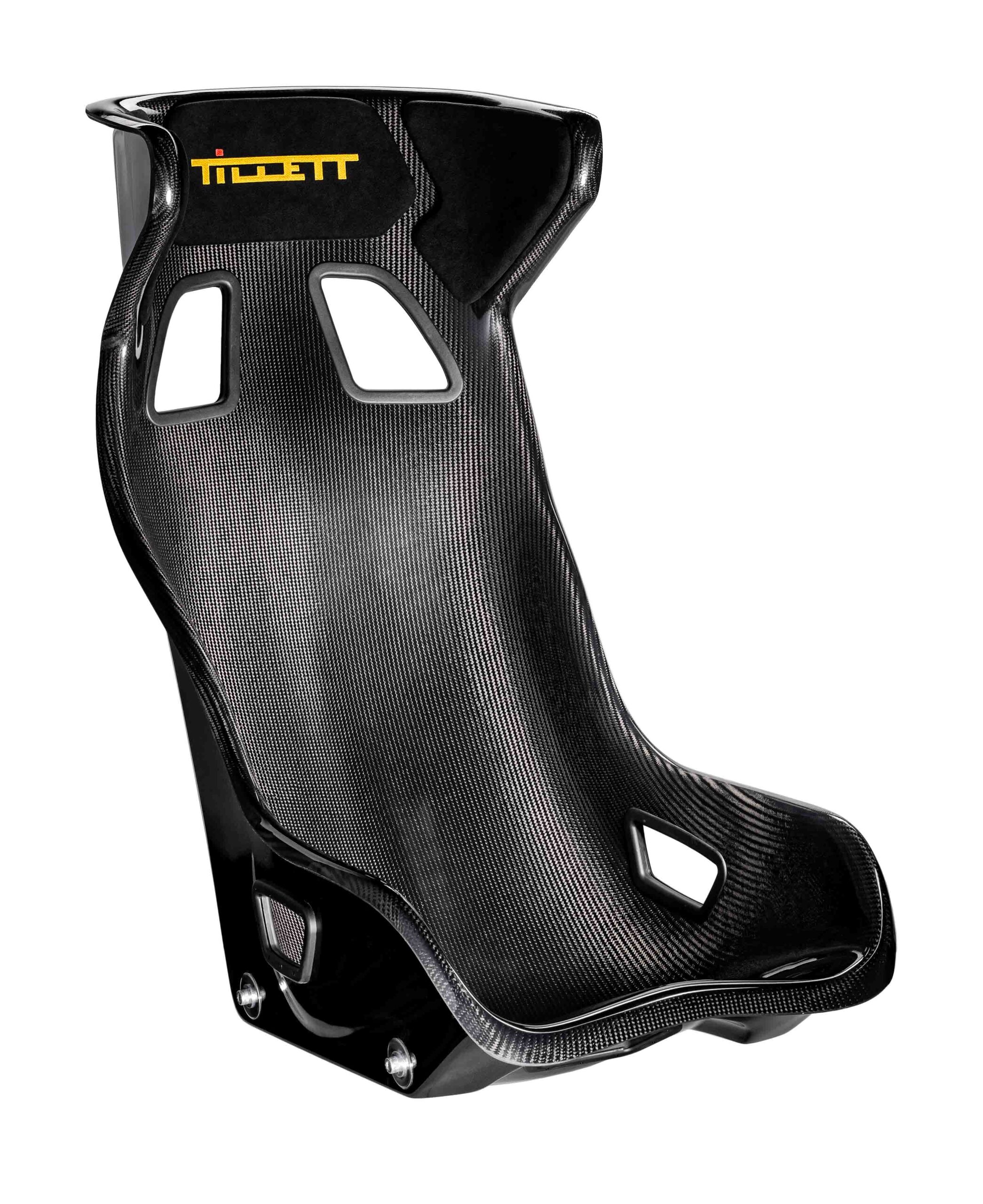
Grouped together due to their similar construction and fitment characteristics. According to Tillet, these models physically fit the NC interior. Their ultra-thin composite shells make them ideal for small cabins where space is limited. Despite their minimal thickness, they remain surprisingly comfortable thanks to optional padding. All are FIA certified, making them an excellent choice for lightweight, track-focused builds.
Weight: 4.5–6 kg (Verified weight) – The lightest seats in this entire listing by a significant margin.
Price: Varies per model (February 2026)
Lotus S1/S2 factory bucket seats
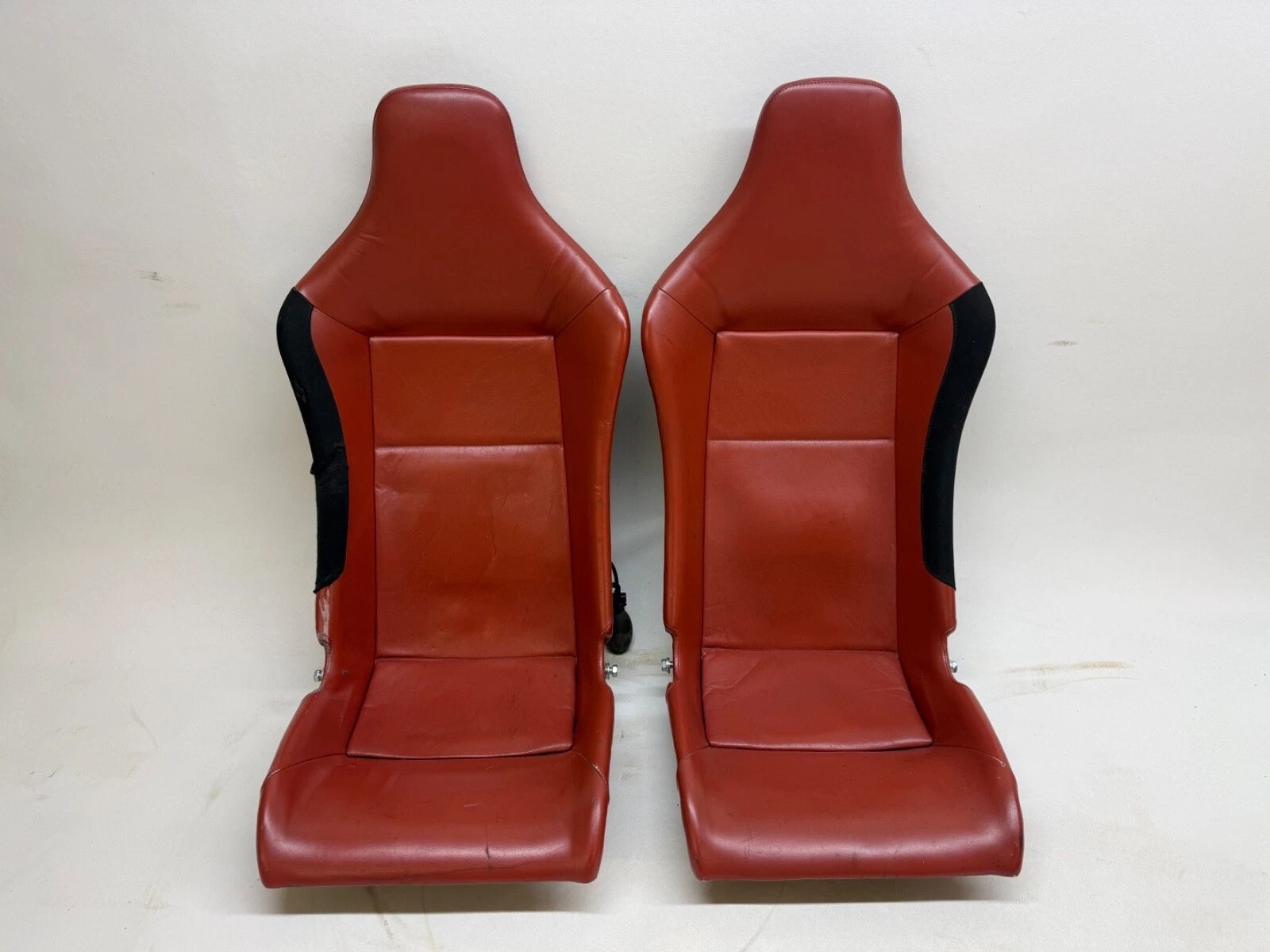
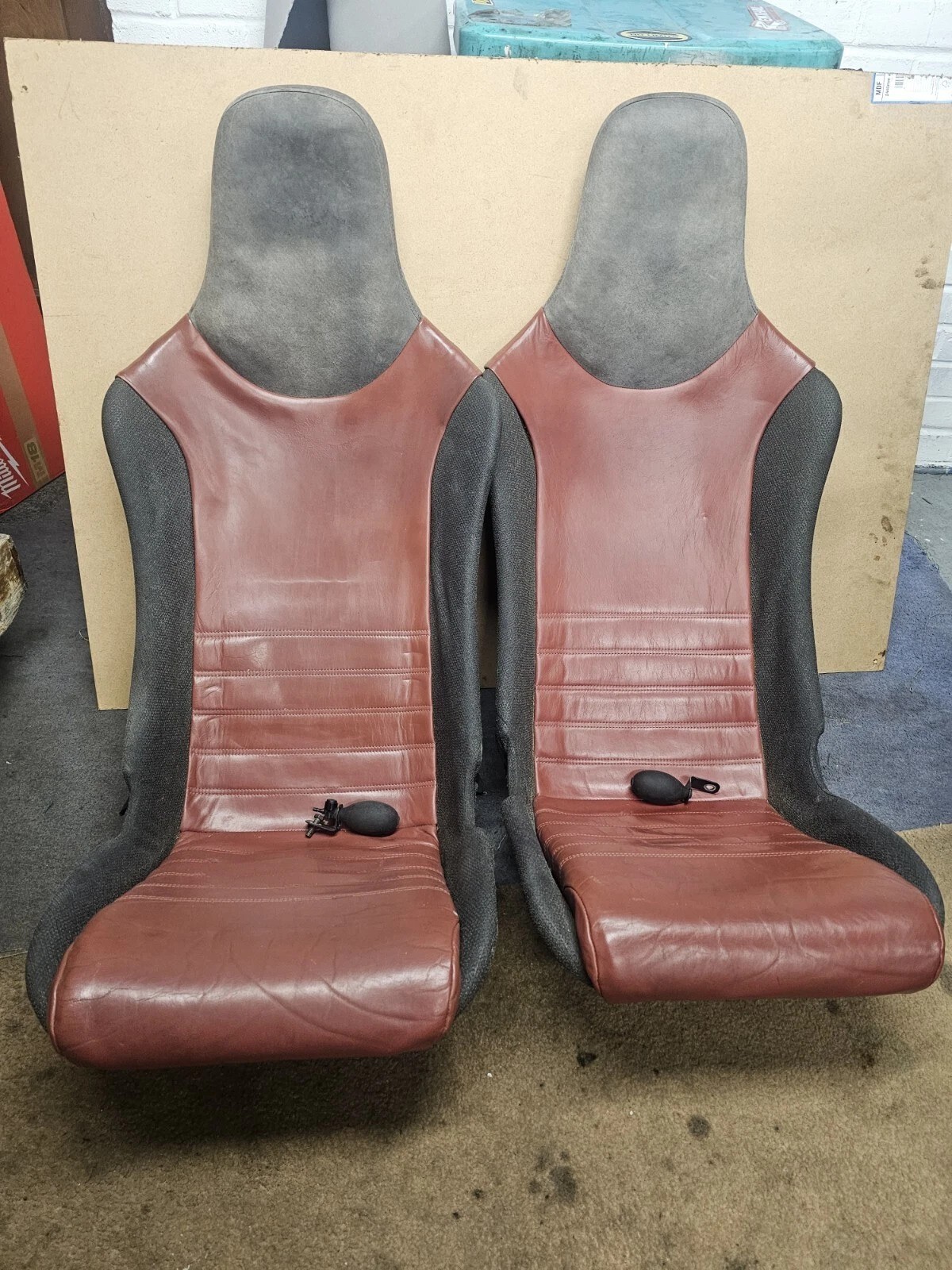
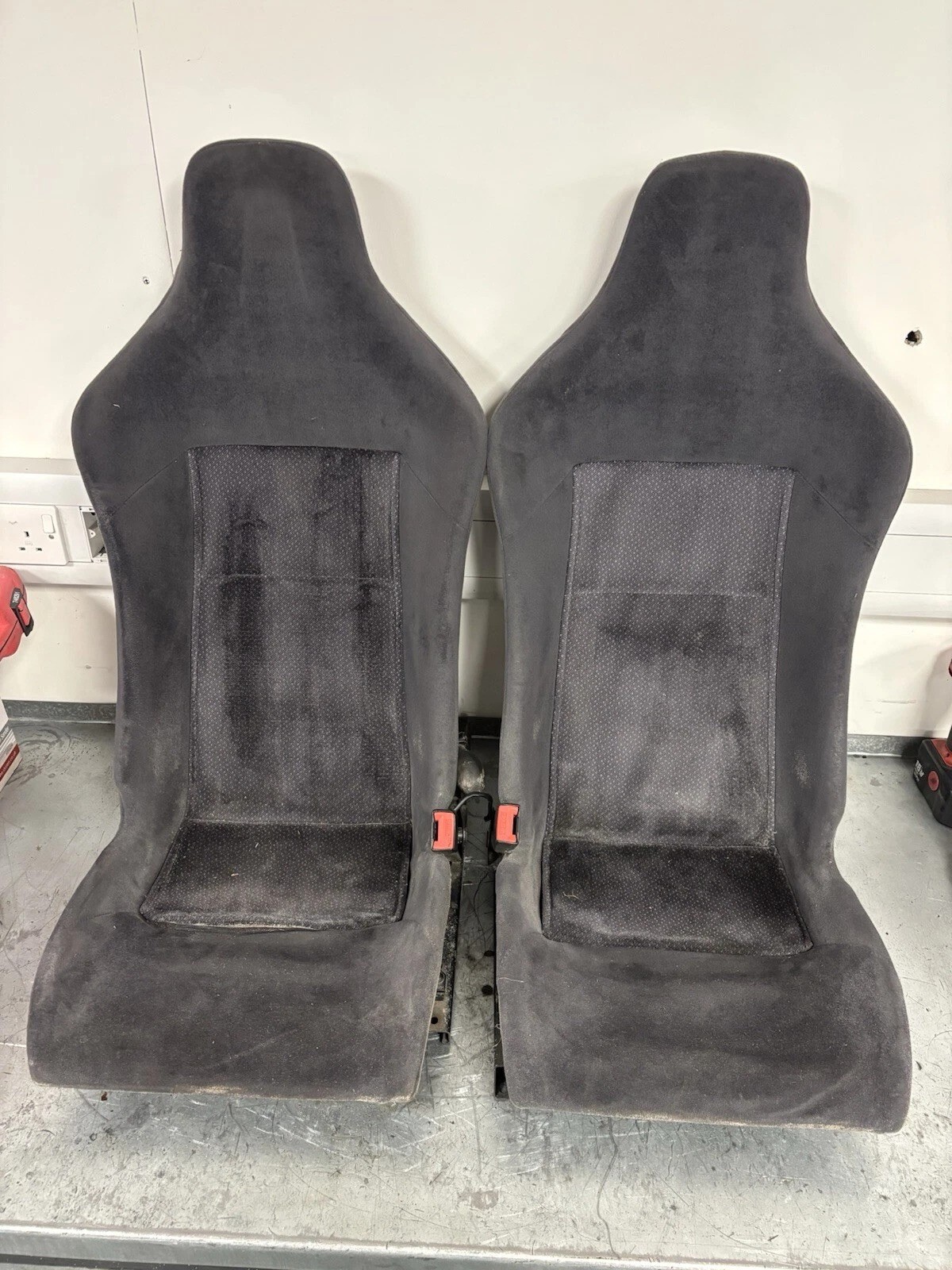
Designed for drivers who intend to retain the factory three-point seatbelt rather than harnesses, making them well suited to use with sliders. Comparable to the rare factory Recaros offered in some NC MX-5 trim levels, though these Lotus seats are thinner due to the absence of SRS explosive charges in the bolsters.
Weight: 6–10 kg (Verified weight) – Among the lighter seats in this list, heavier than Tillet seats but lighter than most aftermarket fixed-back buckets.
Price: £400–800.00 (February 2026)
How do we mount them?
So we got a couple methods of mounting the new bucket seats. The best option if you’re going to use any kind of harness is a fixed base mount such as the Cybul NC offering. Permanently fixing the bucket seat in position so it cannot move. Ideal for a single driver. Maybe not so ideal for a shared vehicle. However the main advantages of having a fixed seat are firstly nobody can ruin that perfect seating position for you so every time you strap in you are right back in the same spot, making it better to become consistent with your driving. Lastly the most important reason is if you are intending on installing a harness such as a six-point-harness (what I’d strongly suggest over a four-point or five-point harness) is the harness angles need to be within the degrees mentioned by the harness manufacture at time of installation. If you have a sliding seat with a harness then your harness anchor point angles may change and fall out of the safe scope the manufacturer has mentioned. What this actually means is in the event of an accident your harness may cause you serious injury and has the potential to be fatal as it’s no longer complying with the manufacturers regulations. Not an issue if you don’t intend to use a harness. But worth mentioning.
Base Mounts
My personal recommendation is the Cybul base mount is the go to for the NC. You can purchase the base mount here.
The second option that mimics a factory seat is using sliders with a base-mount. This option gives you freedom to allow other drivers to use the vehicle say if it’s a shared weekend car for instance. These however usually increase the height of the seat so may not make sense if you’re a taller gentleman or lady.
What about the standard seat belt receiver?
Simply put, some base mounts do offer a location for the receiver to bolt to the seat such as the factory method. The Cybul base mounts like I use do not have the spot. However a decade ago when I did have factory belts I just fabricated a bracket and managed to use one of the unused bolt holes in the side-mount portion of the seat base mount to attach the seat belt receiver to. Worked okay. Ideally you want harnesses if you have FIA spec bucket-seats because the combo will hold you perfectly in place and in my personal experience without harnesses bucket-seats do not work as well at keeping you in place, even in a snug fitting seat.
Do not worry about the seat-belt sounder alarm. If you do not connect the seat belt receiver to the white seat connector it will never trigger the alarm sound to remind you to put your seat belt on.
Why do we need to address the SRS light?
With the factory seats, the leather variants have SRS explosive devices in them to aid in the event of an impact in an accident. The factory cloth seats however do not. This said most UKDM spec NC’s came with leather seats and thus the airbags too.
In order to pass an MOT you cannot have any SRS faults. Which are illuminated as a SRS light that should come on during ignition-on cluster lamp check. Then it should go out once you start the engine. Now there’s two ways to remove this issue with bucket-seats that do not have airbags.
Option one, usually the most common choice. Trick the SRS ECM (computer) to think the airbags are still in place. How? Easy, resistors. This mimics the load the factory SRS airbags had. In order to do this you’re going to want the parts below.
Parts list for easy SRS fix
All you’re going to do is mimic how the factory does the white seat connector with the non-SRS cloth seats. So unplug the white seat connector and using one of the resistors mentioned above fold both legs in on themselves to double up the conductor. Place it in the white seat connector as shown below. Making sure a solid connection between the resistor and the contacts/pins in the white seat connector. Then use some hot glue and very carefully without breaking the electrical circuit put a sensible amount of hot glue over the resistor and plug. To encapsulate the resistor and ensure it does not fall out. Let it cool. Then use some electrical tape mentioned above to wrap around the entire white plug to stop anything shorting the remaining receptacles out.
Option two, if you’re going full racecar spec then you can remove the SRS ECM (computer) entirely. It is located behind the heated-seat switch-panel. You can now remove the rest of the SRS system within the car. As of writing this article, the SRS light will stay illuminated. However shortly I will look into either setting up the Haltech or equivalent standalone ECU to transmit the “I’m here Mr. Dash cluster” message the SRS ECM transmits during start-up to the dash-cluster. I may even make a small Arduino module for stock ECU users who want the SRS system gone for lightweight purposes and simplification while retaining a stock dash-cluster for cost or preference. This option as you may realize is for those serious cars where the factory safety equipment has been superseded by FIA spec equipment and such.
Summary
Quickly summarizing what we’ve learnt. There’s different styles of seat to suite different purposes and character builds. Some seats are a bolt-in solution with the right parts, some require custom mounts or interior modification in order to clear. Most seats will require the driver to remove the padding in the trans tunnel in order to move the seat right up against the trans tunnel and in so clearing and no longer contacting on the door card. This pushes the seat inward more and not directly inline with your feet and the pedal-box. However that is not an issue as many factory cars have the pedal-box offset from the drivers seat. Hopefully this article has been helpful and if there’s one thing I can ask you to do is comment on this article to let others know what your seat setup is, what parts you’ve personally used and your character build. Thank you very much for reading this far.

Leave a Reply